Oscar Arias Quotes
This relationship between freedom and responsibility has not always been clearly understood. Some ideologies have placed greater importance on the concept of individual freedom, while others on the unquestioning commitment to the social group. Without a proper balance, unrestricted freedom is as dangerous as imposed social responsibility. Great social injustices have resulted from extreme economic freedom and capitalist greed, while at the same time cruel oppression of people's basic liberties has been justified in the name of communist ideals and society's interests. Either extreme is undesirable.
Oscar Arias, President of Costa Rica, Nobel Peace Prize Laureate, The Markkula Center for Applied Ethics, Reflections on Working Toward Peace
Sourced by: Eigen's Political and Historical Quotations


He was advocating a middle ground between corporate and wealthy individuals’ control of the government which then to a great extent existed and the Communist idea of the dictatorship of the proletariat.


The issue of slavery which had been suppressed in Congress for the first decades of the nation broke out when Missouri statehood was considered. By previous agreement, slavery was not even discussed in Congress but the time period elapsed. Tallmadge not only proposed that no more slaves could come into Missouri {613176} but most shocking to the Southerners was that every person born in the new state would be free at the age of 25. In a generation, there would be no more slavery in Missouri and there would be no economic compensation for slave owners at all. The House of Representatives accepted the amendment, but it failed in the Senate. At that time, Senators were not elected by voters but were appointed by the state legislators and the Southern slave states had a disproportionate share of the senate from a population point of view. But what this quotation shows clearly that a majority of the country in 1819 were opposed to slavery and were willing to end it without compensation.

Benezet was a Huguenot whose family had been persecuted in France. He identified with the cause of Blacks, Indians and Acadians. He was also one of the first leaders of the American Peace Movement.


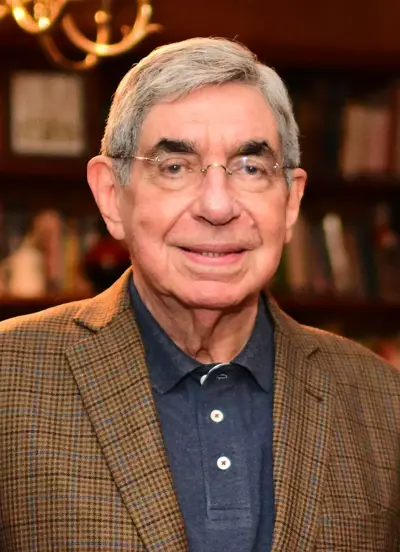
Óscar Arias Sánchez is a Costa Rican activist and Nobel Peace Prize laureate. He was President of Costa Rica from 1986 to 1990 and from 2006 to 2010. He received the Nobel Peace Prize in 1987 for his efforts to end the Central American crisis. He was also a recipient of the Albert Schweitzer Prize for Humanitarianism and a trustee of Economists for Peace and Security. In 2003, he was elected to the board of directors of the International Criminal Court's Trust Fund for Victims.
