Geoffrey Chaucer Quotes
Alas, alas, that ever love was sin! I ever followed natural inclination Under the power of my constellation And was unable to deny, in truth, My chamber of Venus to a likely youth.
Chaucer, Geoffrey. The Canterbury Tales. Translated by Nevill Coghill, Penguin Books, 1951, p. 267.


The quotation is noteworthy only because of the fact the subject of sex with animals is never discussed by politicians and certainly not during a political campaign, and this is the only case known where a political candidate admitted something that is actually quite common in rural farm and ranch areas but generally considered sinful and perversion in most circles.

Interest is forbidden in all transaction, both business and personal.

There is much debate about the actual truth of this widely believed story. There may have never been such a debate at the Council. Some scholars believe the “rumor” confused the council meeting with that of a local Synod in France in 585 AD which is described in The History of the Franks by Gregory of Tours where such a debate did take place. However, although the Catholic Church by no means considered women equal to men, the female possession of a soul many argue was generally assumed by most clerics throughout history. They point to the fact that females had always been baptized and that there were early female Saints—concepts which would have been inconsistent with a general belief that women did not possess souls. De Beauvoir’s basic point however, is not dependent on the truth of the story, but can be made as a result of the fact that women had been raised sufficiently to possess souls, regardless of when and where in Church history.


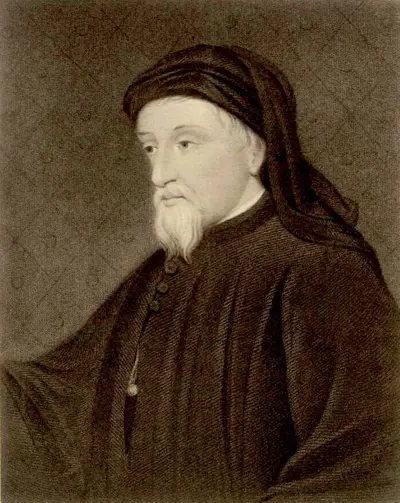
Geoffrey Chaucer was an English poet and author. Widely considered the greatest English poet of the Middle Ages, he is best known for The Canterbury Tales. He has been called the "father of English literature", or, alternatively, the "father of English poetry". He was the first writer to be buried in what has since come to be called Poets' Corner, in Westminster Abbey. Chaucer also gained fame as a philosopher and astronomer, composing the scientific A Treatise on the Astrolabe for his 10-year-old son Lewis. He maintained a career in the civil service as a bureaucrat, courtier, diplomat, and member of parliament.
