Ludwig von Mises Quotes
Again and again, the early historians of capitalism have—one can hardly use a milder word—falsified history.
Needless to say, those historians did not agree with Mises version of the history of capitalism either.
Ludwig von Mises, 1881-1973, Austrian Economist & Political Philosopher, Lecture Princeton University, Liberty and Property, 1958
Sourced by: Eigen's Political and Historical Quotations

Countess of Blessington


Governor Romney, had a weakness of getting many his “facts” about the past wrong and had been criticized for it. When he stated some “facts” that the President thought wrong, Obama countered with this quotation. Fact checkers later corroborated the President’s judgment.

This is an example of the politicization of history. Late in the first millinium Islamic warriors invaded and conquered much of Hindu India. The Muguls controlled much of India for hundreds of years. When the English conquered India, the Muslims rejected Western education and legal systems while the Hindus did not. After several generations the Hindus, better educated, and more sophisticated in Western ways took advantage of the numerical majority and regained control under the British. With Independence, Islamic nationalists insisted upon partition of the country creating a Muslim country, Pakistan. Millions of Indians were murdered in internecine attacks during the partition. Subsequently, Muslim historians have written one version of the history of India, while Hindu historians have written another. They appear to come from different planets or parallel universes. British historians have a third universe.


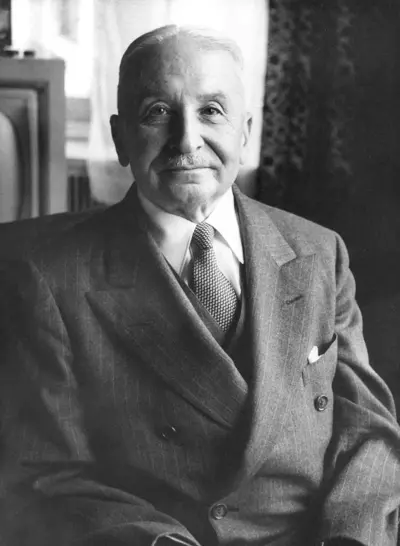
Ludwig Heinrich Edler von Mises was an Austrian School economist, historian, logician and sociologist. Mises wrote and lectured extensively on the societal contributions of classical liberalism. He is best known for his work on praxeology, a study of human choice and action.
