Continental Congress Quotes
After the unremitted efforts of our enemies, we are stronger than before. Nor can the wicked emissaries who so assiduously labor to promote their cause, point out any one reason to suppose that we shall not receive daily accessions of strength. They tell you, it is true, that your money is of no value, and your debts so enormous they can never be paid …. It becomes you deeply to reflect on this subject. Is there a country on earth which hath such resources for the payment of her debts as America? such an extensive territory? so fertile, so blessed in its climate and productions? Surely there is none. Neither is there any to which the wise Europeans will sooner confide their property. What, then, are the reasons that your money hath depreciated? Because no taxes have been imposed to carry on the war: because your commerce hath been interrupted by your enemy's fleets: because their armies have ravaged and desolated a part of your country: because their agents have villainously counterfeited your bills: because extortioners among you, inflamed with the lust of gain, have added to the price of every article of life; and because weak men have been artfully led to believe that it is of no value.
Note the candor with which the Congress provided the truth to Americans about the financial situation of the nation. Despite the national crises and emergency of the war, the Congress told the truth and did not treat the citizens as children from whom bad news must be withheld. At the time, each state and many individual banks had their own paper currency, these could be easily counterfeited and were done so by the British to collapse the American economy. Because of this early traumatic experience with paper money, the United States did not use it for another 70 years.
Continental Congress, An Address Of The Congress To The Inhabitants Of The United States Of America, May 8, 1778
Sourced by: Eigen's Political and Historical Quotations

Specie is a word for paper money. Such political artifices were well known in More’s time, and yet still exist in many countries.


Conservatives are surprised to learn that their great economic nemesis was one of the early economists who saw the danger of paper money and government control over the minting of money which is one of their core concerns.


This quotation came into play in 2011 when the Tea Party tried to cause the US to default on its debts rather than raise the debt ceiling. Even their unsuccessful attempts caused much loss of confidence for America the world over, violating McKinley’s principle.

This is the first major history of banks written in the United States.


This is a very interesting quotation in that it is one of the first suggestions that money debasement can be caused by a lack of trust and confidence in the government rather than the percentage of precious metals in the coins.

The same argument can be made against the modern paper money supply. What Jefferson and most of the founding fathers, with the exception of Alexander Hamilton. did not realize was that the major stability of any kind of money was not only the silver or gold that backed it but the political and legal stability of the nation and the size of its productive economy. Where Jefferson was right however is that all these banknotes at the time were issued by local private banks. The Government had no responsibility for paper money and had no knowledge of how much paper money any bank issues and whether or not they had any silver to back it up. Banks didn’t trust other bank’s notes and would only redeem them at a discount. A $10 note from a South Carolina bank might only be worth $7 in New York and $6 in Boston. The early American monetary system was a mess.

At the time, a bank note—paper money issued be a private bank—was not backed by any gold or silver and was not insured bym the government. A bank could print as much as they wanted, so it was always worth less as the further you were from the particular issuing bank, the less you could get your bank note, because no one knew whether or not the issuing bank would redeem the note or even be in existence. So every private bank note had diminished value for the public. However, carrying gold and silver around and making change for precious metals was difficult and often impractical. So people used banknotes. The same thing happens with credit cards today. The merchant has to pay a fee to the credit card company and the bank and therefore charges us more for whatever we buy. But most consumers and merchants are willing to pay the difference to obtain the convenience of the credit card,

This quotation is fascinating because it illustrates the degree to which the Southern people censored themselves on what in most cultures would be morale issues. In many ways the ability to ignore reality made it easier for the Confederate government to operate, but distorted the decisions that were made. Arguably, in most other cultures, public opinion on the reality of the situation would have brought the war to an end sooner and ironically on far better terms than they ended up with. Eggleston was an accomplished writer who had served in the Confederate army of the Civil War. 20 year after the war he wrote a series of articles for the prestigious Northern Atlantic Monthly trying to convey the war from the Southerner’s point of view.
Stamp was a banker and the 2nd richest man in England at the time. Yet he warned about aspects of banking that needed reform and regulation.

Most people owned a little land as most of America were still farmers. They had small amounts of money at different times but spent it for necessities. A relatively few people (mostly in the East) had money—gold and paper currency backed by gold. If the price of property was high, only rich could afford to buy it. The home mortgage system did not then exist, so there was no way that the average land owner could get enough money to buy land to expand farms or buy for children unless the price was low. Today, most land owners want the price of land to be high. The financial system in use at the time makes the difference.


State Bond Holders prospects were not looking very good and some states would only discount their debts while others would not pay for the War Bonds at all. Most people had written off their State Bonds. The idea of the new National Government assuming this debt was profound for people who understood government, laws, and the like, but most patriotic farmers and frontiersmen sold their bonds to Speculators for a fraction of the value. Under the theory of bailing out the States, the rich Bankers, financiers and speculators of some states who had paid pennies on the dollar to buy the bonds would get the full face. would and make a huge windfall profit, The patriots who originally bought the bonds would have taken a big loss. The same argument with fairness and business support to be balanced has been ongoing in our democracy over and over whenever, the Federal Government has bailed out banks, countries, and corporations or guaranteed debts.
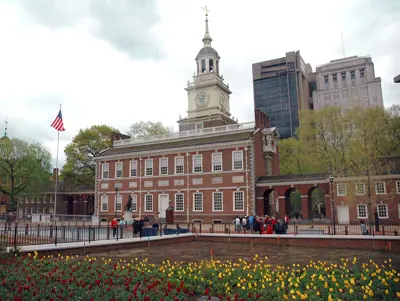
The Continental Congress was a series of legislative bodies which met in the British American colonies and the newly declared United States just before, during, and after the American Revolution. The term "Continental Congress" most specifically refers to the First and Second Congresses of 1774–1781 and may also refer to the Congress of the Confederation of 1781–1789, which operated as the first national government of the United States until being replaced by the current congress. Thus, the term covers the three congressional bodies of the Thirteen Colonies and the new United States that met between 1774 and 1789.
