H. G. Wells Quotes
After telephone, kinematograph and phonograph had replaced newspaper, book schoolmaster and letter, to live outside the range of the electric cables was to live an isolated savage.
Wells, H. G. When the Sleeper Wakes. Harper & Brothers, 1899, p. 57.


The Yazidis are a Middle Eastern minorities with their own culture and their own religion who have lived in out of the way, mountainous, harsh land where they asked for and got nothing from the governments in the area which tended to pay then no attention as they did not much interact with others outside their small area. When the ISIS took over the area, they did pay attention to the Yazdis, insisting that they adopt Islam as their religion. When they did not, many of the men were killed, and the women and girls given to the ISIS fighters as “wives”. The United States airstrikes saved a large proportion of the Yazidis but as Russell points out, modernity was making it almost impossible for a small people to live in de facto isolation.

Not only did the Radio fail to inhibit war, but Marconi completely missed the way demagogues like Hitler and Mussolini would use propaganda via the radio to induce war in their societies. They did not justify war; they made it a national duty. Media inventors seem to have an overly optimistic view of the invention’s effect. See {635261}.


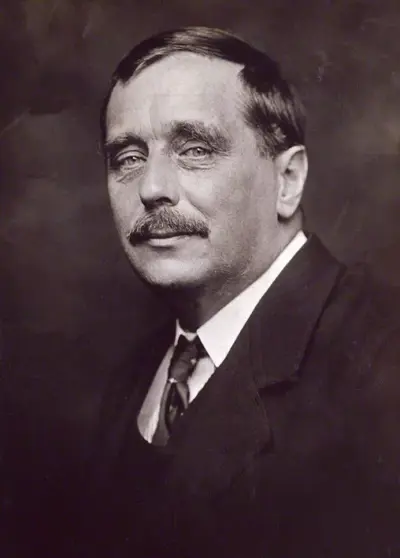
Herbert George Wells —known as H. G. Wells—was a prolific English writer in many genres, including the novel, history, politics, social commentary, and textbooks and rules for war games. Wells is now best remembered for his science fiction novels and is called a "father of science fiction", along with Jules Verne and Hugo Gernsback.[a] His most notable science fiction works include The Time Machine (1895), The Island of Doctor Moreau (1896), The Invisible Man (1897), and The War of the Worlds (1898). He was nominated for the Nobel Prize in Literature four times.
