Leon Panetta Quotes
After every major conflict - World War I, World War II, Korea, Vietnam, the fall of the Soviet Union - what happened was that we ultimately hollowed out the force, largely by doing deep across-the-board cuts.
Panetta, Leon. "Remarks to the House Armed Services Committee." United States House of Representatives, 15 Feb. 2012.


Unfortunately, the prime minister turned out to be very accurate in his predictions. The Second World War functioned just as he said.


Germany had just attacked Russia with whom it had a treaty. For a while, Hitler paid little attention to Italy and just gave their “ally” orders and instructions. Italian public opinion was concerned about the same question. See {627973} .

In 1938 Germany had rearmed and resumed its aggressive designs of expansion. Hitler wanted the Sudetenland part of Czechoslovakia and threatened an invasion of that country. England had France had a treaty obligation to militarily support Czechoslovakia if it were attacked. British Prime minister Neville Chamberlain and the French were desperately trying to avoid war, not realizing that with Hitler, that position was the very thing that would bring on war. So they agreed to Hitler’s demand and allowed Czechoslovakia to be partitioned and the Sudetenland was annexed to Germany. This craven appeasement emboldened Hitler who then decided to conquer all of Europe as he had no serious opposition from France and England—the two powers that might have stopped him. (At the time, the French had a larger army than the Germans.)


The War Plan that the Germans had developed--{642092}—had gone awry at the battle of the Marne in late 1914.
The Boers had just a few years before lost their war with the British who were then in control of South Africa. However, the British did not treat the Boers harshly in defeat and most Boers were at the time farmers and land owners who were a major force in democratic South Africa and had much invested in the nation. Others were still resentful of the British. The Boers sided with the British and fought the Germans who had troops and colonies in Africa. Like the Irish, culturally, they were always up for a good fight.
English foreign and military policy had been so effective that English citizens had been completely sheltered from all the British military hostilities throughout the world. Keyserlingk and other German military planners, observing the effect that home public opinion had on war policies and practices, placed a high priority on bringing war to the British civilians and sinking merchant ships was the one way they had technologically open to them. Latter, in WWII, the same objective was achieved by the bombing of the Blitz—bombing of London and other cities with planes and rockets.


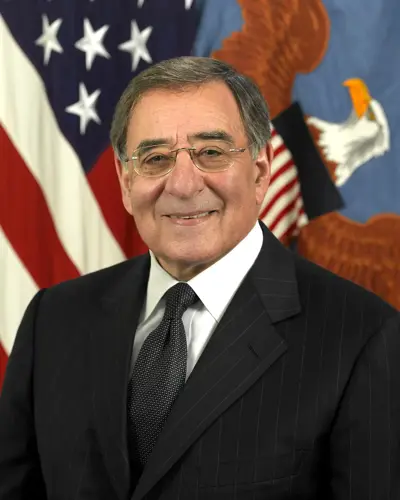
Leon Edward Panetta is an American politician who has served in several different public office positions, including the Secretary of Defense, Director of the CIA, White House Chief of Staff, Director of the Office of Management and Budget, and as a U.S. Representative from California. A Democrat, Panetta was a member of the United States House of Representatives from 1977 to 1993, served as Director of the Office of Management and Budget from 1993 to 1994, and as President Bill Clinton's Chief of Staff from 1994 to 1997. He co-founded the Panetta Institute for Public Policy and served as a Distinguished Scholar to Chancellor Charles B. Reed of the California State University System and as a professor of public policy at Santa Clara University.
