Marvin B. Rosenberry Quotes
Administrative tribunals did not come because anyone wanted them to come. They came because there seemed to be no other practical way of carrying on the affairs of government and discharging the duties and obligations which an increasingly complex social organization made it necessary for the government to perform....Those who have opposed the creation and extension of administrative tribunals have had the best of the argument on legal and constitutional grounds, but have been obliged to yield to an irresistible social pressure. Would it not be wise to recognize this fact, to give it a place in our legal system ... to the end that it may not become a source of tyranny and oppression?
Shortly thereafter administrative law judges and tribunals were incorporated officially into Wisconsin by the legislature.
Marvin B. Rosenberry, 1868-1958, Wisconsin Supreme Court Justice, Early 1920s
Sourced by: Eigen's Political and Historical Quotations


Elected at 24 as the youngest British Prime Minister. This is perhaps the most elegant statement on the problem in English history, but it was not the first. Oliver Cromwell had preceded him. See Oliver Cromwell’s succinct version earlier: {585597}.

Honore Gabriel Victor Requiti. The French King had just opened the French National Assembly which contained deputies (delegates) from the clergy, the nobility and the people. The King had made what some deputies thought was a very constructive and responsible speech opening the assembly. Mirabeau observed that as long as there was an absolute monarch in place, even a benign one. It was the presence of a monarch itself that was evil.

1st Baron Lytton of Knebworth
It didn't take long in early America for legislative caucuses to spring up:

Referring to the McCarran Act which he was the only Senate Republican to oppose:

Many new laws have unintended consequences. In many cases the laws are not sufficiently effective to solve the problems for which they were passed. In other cases, the laws are too draconian and the public and the legislators have second thoughts. Almost all laws of significance require amendments and adjustments over the years.


This quotation is historically important because Davis clearly states the reason for the rebellion of the South. The anti-slave states were growing at a greater rate than the slave states and despite the greater voting power that a southerner had (a result of the 3/5 count of slaves for census purposes, and the Senate), the handwriting was on the wall and the majority of the United States was against the vicious institution of slavery and would make it unprofitable, impossible and/or illegal in the coming years. Southern slavery advocates saw this as a “tyranny of the majority” and therefore took up arms. In the early 20th century, apologists for the Southern rebellion tried to promote the idea that there were reasons other than slavery, but this quotation and the resolutions of the states who withdrew from the Union make it clear that the right to maintain slavery was the only significant issue. In that sense it was a States’ Rights issue, but the South was opposed to States’ Rights when it came to States refusing to return fugitive slaves when Federal Law required such under the Dred Scott Supreme Court Decision.


In America we do not have an official church that can morally speak for the society as a whole. As a result, we often use the law to make a moral statement even if the law is rarely enforced like prostitution. Sometimes we hear the expression, “There ought to be a law” as that is the only way we can express a societal moral value.


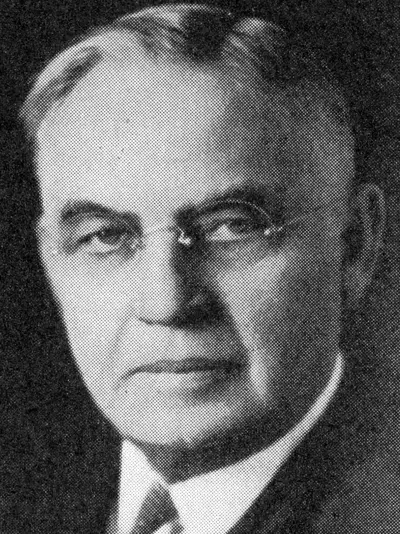
Marvin Bristol Rosenberry was an American lawyer and judge from Wisconsin. He was the 13th Chief Justice of the Wisconsin Supreme Court.
