Cornel West Quotes
Administrations of both parties lie. The question is the weightiness of the lies.
Cornel West, Philosopher, Interview, PBS The Travis Smiley Show, January 16, 2004
Sourced by: Eigen's Political and Historical Quotations

Alsop, a political hawk was convinced, as many other right wingers were at the time that the Russians had forged ahead of us in offensive missiles. When he asked President Eisenhower, the President never denied it, but never went to Congress to ask for more money to close the “missile gap”. Alsop made this shocking accusation which offended many Americans, but pleased the ultra-hawks and anti-communists. Most of the nation however then believed that there was a missile gap, with varying explanations of Eisenhower’s silence on the matter. Two years later John F. Kennedy, used the “missile gap” when running in 1960 against Nixon by attacking Nixon and Eisenhower for allowing us to fall behind the Russians at have a missile gap. When Kennedy became President, he was very surprised that there was no missile gap favoring the Russians—it was favoring the United States. Eisenhower did not want the Russians to know that he knew exactly what they were producing and deploying in missiles through great espionage sources. By not saying anything in the face of the accusations, the Russians assumed that the Americans really thought that they had more capacity than they did. And Eisenhower wanted that so that they would be secure that the United States had no real knowledge of their missile capacity. If Eisenhower had actually told the nation that the Russians were really behind us, the Russians would suspect a security leak and our sources could be compromised.


Comment to President Teddy Roosevelt as while he, as US Secretary of State, dealt extensively with a deceitful Russia as they attempted to expand into Chinese Manchuria which eventually led to the Russo-Japanese war of 1904-1905.

He was asked why the War Office maintained three sets of figures: 1st Earl of Oxford

He warns particularly of politicians who believe their own lies.


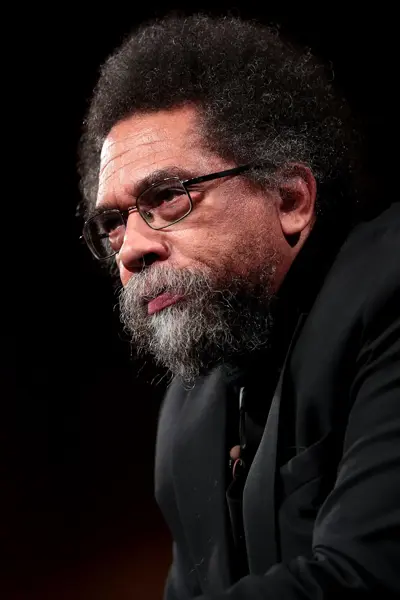
Cornel Ronald West is an American philosopher, political activist, social critic, and public intellectual. The grandson of a Baptist minister, West focuses on the role of race, gender, and class in American society and the means by which people act and react to their "radical conditionedness." A radical democrat and socialist, West draws intellectual contributions from multiple traditions, including Christianity, the black church, Marxism, neopragmatism, and transcendentalism. Among his most influential books are Race Matters (1994) and Democracy Matters (2004).
