Deng Xiaoping Quotes
Absorbing foreign capital and technology and even allowing foreigners to construct plants in China can only play a complementary role to our effort to develop the productive forces in a socialist society. Of course, this will bring some decadent capitalist influences into China. We are aware of this possibility; it's nothing to be afraid of.
Deng, Xiaoping. "Answers to the Italian Journalist Oriana Fallaci." Selected Works of Deng Xiaoping, vol. 2, Foreign Languages Press, 1984, p. 331.


After Turkey’s defeat in WWI, some Turkish leaders like Riza Nur wanted Turkey to become a colony of America. This they believed would hasten Turkey’s development and modernization.

During the revolution against apartheid, a number of communist organizations allied themselves with the ANC against the White minority regime. A few of the communist leaders rose and became officials of the ANC. The vast majority of the ANC supported private enterprise with the kind of socialist aspects that were then typical of the Scandinavian countries, Germany and even France. Mandela, before the successful ousting of the Apartheid held a number of communist ideas and principles as the “capitalists” were making money from the apartheid system and there would support the status quo, However, he had a change of heart and mind regarding private enterprise after the successful effort to end white minority rule. He was good to his word, and even after he retired, the ANC and the government maintained pro private enterprise policies.


This quotation is important because it illustrates the important research and development role that the Government has played for the most important technological innovations of the second half of the 20th century. Even though most of the computer breakthroughs were developed by private companies, the government paid for most of the R&D and purchased the vast majority of the first computers on the market when private companies had not yet realized the value of computers and with the exception of IBM most of the private sector would invest no money in this unproven technology. This was the same as the telegraph, the railroads and others before and the Internet and more afterward.


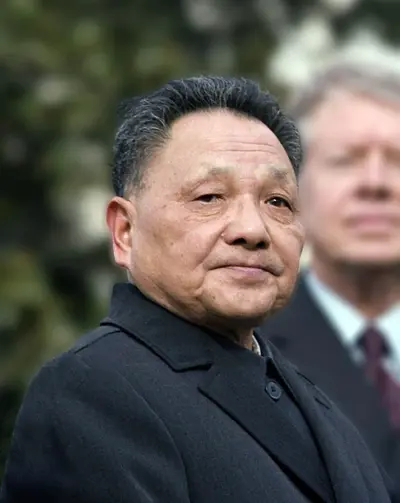
Deng Xiaoping was a Chinese revolutionary and statesman who served as the paramount leader of the People's Republic of China (PRC) from December 1978 to November 1989. After Mao Zedong's death in 1976, Deng gradually rose to supreme power and led China through a series of far-reaching market-economy reforms, earning him the reputation as the "Architect of Modern China".
