Basil of Caesarea Quotes
A woman who deliberately destroys a fetus is answerable for murder. And any fine distinction as to its being completely formed or unformed is not admissible amongst us.
Basil of Caesarea. "Letter 188." Nicene and Post-Nicene Fathers, Second Series, Vol. 8. Edited by Philip Schaff and Henry Wace, Christian Literature Publishing Co., 1895, p. 225.


Paul had been the Libertarian Party Presidential Candidate and in keeping with the libertarian philosophy of the party supported the right to abortion and was adamant that the Government should stay away from such issues of morality. However, in 2007, he tried to secure the Republican Presidential Nomination. At that time the religious right dominated the Republican Party and opposition to abortion was a litmus test issue. Paul flip flopped, but it did him little good. The issue of the fetus and protection of the law is not the simple issue that Paul made it out to be. Even the most ardent supporters of abortion has argued that a fetus ought to be protected both civilly and criminally in law. Where the disagreement lies is at what point in time and/or development does the fetus constitute life and deserve the protection of life and how society shall deal with the conflicting life and health interests of mother and fetus.


Cox’s 1974 prediction of the legal precariousness and temerity of the 1973 U.S. Supreme Court Roe v. Wade decision on abortion.


First female presidential candidate & first divorcee to run for that office. This quotation is quite remarkable for several reasons. Woodhull was far ahead of not only her time but the other feminists and suffragettes at the time in demanding equal right for all women in all thinks including free love. She was generally viewed as an amoral radical. Yet on this critical issue, the was an opponent of abortion and one of the first people to ever claim that a fetus had rights.
While most people at the time opposed abortion, it was based on religious doctrine. Woodhull based her opposition on an equal rights argument—perhaps the first American to do so. Note, that like other feminist leaders of the time, she opposed abortion. However, between the economic pressures and the illegality of birth control devices and information provision, abortion was a critical decision that had to be faced by many women. Later, feminist leadership had to come to grips with the issue of who makes the decision in these areas, and placed the right of the woman to make these decisions, as opposed to husbands, fathers and government, as the highest priority. Then, when the drivers for abortion could not be eliminated, it was women who were criminalized. Feminists then fought for the right of abortion and the right of the woman to make decisions, but feminine leadership has never—in America—been advocates of abortion as opposed to the right of abortion, a subtlety that often is lost.

Many fundamentalist Muslims, regardless of the history, hold abortion to be impermissible since no one can tell exactly when the fetus is given a soul. Other Muslims believe abortion is moral and permissible in the early stages of pregnancy but ot later. The Jewish tradition and law before Islam was that the fetus became a life as soon as the head appears in childbirth. Thus abortion is permissible.
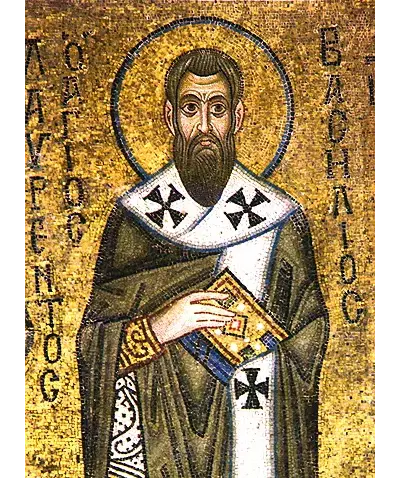
Basil of Caesarea, also called Saint Basil the Great was a bishop of Caesarea Mazaca in Cappadocia, Asia Minor (modern-day Turkey). He was an influential theologian who supported the Nicene Creed and opposed the heresies of the early Christian church, fighting against both Arianism and the followers of Apollinaris of Laodicea. His ability to balance his theological convictions with his political connections made Basil a powerful advocate for the Nicene position
