Manu Quotes
A wise man should constantly discharge the paramount duties, but not always the minor ones; for he who does not discharge the former, while he obeys the latter alone, becomes an outcast.
Manava Dharma Shastra. This is the Hindu version of the management and political principle that says “concentrate on the important things, not the minor ones.” This text is a part of the Hindu Holy Texts. Hindus believe that Manu was a prophet whose text is revealed or inspired.
Manu, ~ 500 BC, Hindu Teacher from India, Laws of Manu
Sourced by: Eigen's Political and Historical Quotations


The import is that if the two are in conflict you should sacrifice your life to do your duty.


… to escape censure a man must pass his whole life without saying or doing one ill or foolish thing.
This of course applied mostly to public personages and applied not only in the political arena but also in the social arena.


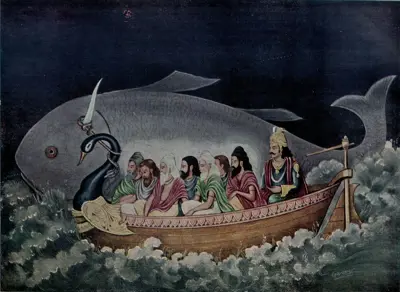
Manu (Sanskrit: मनु) is a term found with various meanings in Hinduism. In early texts, it refers to the archetypal man, or to the first man (progenitor of humanity). The Sanskrit term for 'human', मानव (IAST: mānava) means 'of Manu' or 'children of Manu'. In later texts, Manu is the title or name of fourteen mystical Kshatriya rulers of earth, or alternatively as the head of mythical dynasties that begin with each cyclic kalpa (aeon) when the universe is born anew. The title of the text Manusmriti uses this term as a prefix, but refers to the first Manu – Svayambhuva, the spiritual son of Brahma.
