James Harrington Quotes
A whole army, though they can neither write nor read, are not afraid of a platform, which they know is but earth or stone; nor of a cannon, which, without a hand to give fire to it, is but cold iron; therefore a whole army is afraid of one man.
Harrington, James. The Commonwealth of Oceana. Printed by J. Streater for Livewell Chapman, 1656.


History is replete with instances of military coups. In the final analysis, in every country at all times, there is no force in a society that could cope with a military which decides to act on its own. The Founding Fathers were very conscious of this reality and history, hence the firm civilian control of the military in America.

He was later assassinated.

His hubris soon backfired as the Indians learned how to tactically cope with firearms. For example they soon learned that they would see the flash of the musket before the ball would discharge, so would lie down and the bullets would pass overhead. The muskets were effective as defensive weapons from behind barricades though not very accurate. Swords and pikes turned out to be more effective in most cases.

Obama was a President who believed deeply in the concepts of checks and balances and separation of powers. He did not punish members of Congress who opposed him by closing federal installations in their state of district, not giving government contracts to companies in his district and in the case of member of his own party who were “recalcitrant” supporting opponent in primary elections and failing to support in general elections. Presidents Nixon and Johnson used these techniques particularly effectively. As a result they pushed their legislative programs through Congress very effectively. All other modern Presidents have done this to one degree or another, but Obama did not. He believed that pressure on member of Congress should be limited to persuasion and public debate moving public opinion. Many seasoned politicians and political observers however thought that this was Obama’s biggest weakness as a President. Lyndon Johnson did not have to actually punish many member of Congress, as his willingness to do so was well known and thus few opposed him when he called or met with them and “gave them the treatment.” But Congress knew that Obama had taken punishment and retaliation off the table, and many opposed him including member of his own party.


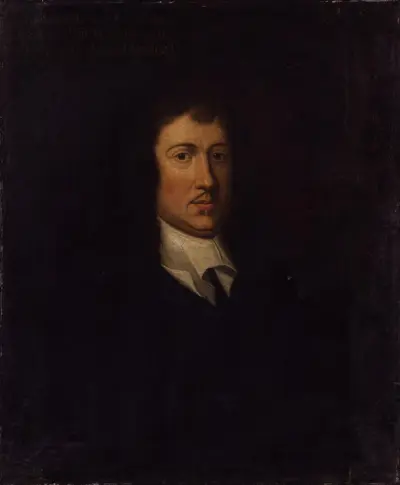
James Harrington (or Harington) was an English political theorist of classical republicanism. He is best known for his controversial publication The Commonwealth of Oceana (1656). This work was an exposition of an ideal constitution, a utopia, designed to facilitate the development of the English republic established after the regicide, the execution of Charles I in 1649.
