Stephen Crane Quotes
A very little boy stood upon a heap of gravel for the honour of Rum Alley. He was throwing stones at howling urchins from Devil's Row, who were circling madly about the heap and pelting him. His infantile countenance was livid with the fury of battle. His small body was writhing in the delivery of oaths.
Crane, Stephen. Maggie: A Girl of the Streets. D. Appleton and Company, 1896, p. 1.


Prior to whites settling in America, various Indian tribes had a long history of fierce fighting for control of Kentucky. The Transylvania Land company negotiated for the “rights” to Kentucky. Dragging Canoe, who opposed the treaty, argued that the land had a bad history and would be very difficult to settle. Poet Theodore O’Hara described Kentuckians as “Sons of the Dark and Bloody Ground” in his poem, The Bivouac of the Dead.


The general was expressing a principle that is believed to this day by many policy makers, military people and civilians: Once a war has begun, one must not stop it until victory has been attained. It is unacceptable to negotiate an end to hostilities unless the enemy has been badly beaten on the battlefield. There is this view that “honor” would be lost and that enemies and even allies will not respect you and think the nation is weak and fearful. So there would always be extensive pressure to keep on fighting and not negotiate until there is a military dominant position.


While this was a common attitude for years before, the horrors of World War II produced a general revulsion to war and an awareness that war between two nations spills over to other states in the region and in an era of globalization, effects countries in other parts of the world. So there has been a tendency to use diplomacy endlessly, even after "things have gone too far". Historically, when things reached that point, the parties did fight it out, and when one was weakened sufficiently, negotiations and diplomacy could then be fruitful.

The Democrats used this quotation during the 1964 presidential campaign, in a famous TV ad with a little girl, a mushroom cloud and the announcer quoting Goldwater.


Alluding to Ecclesiastes 3:1 ff, "For everything there is a season, and a time for every matter under heaven: a time to be born, and a time to die;.." The exact wording of his sermon has been lost, but the sentiment was reported by many.


Attila the Hun


He was ironically observing that most animals and primitive humans, there is fighting among the species but rarely do the fight to the death. One usually gives up, and the other will let him retire from the fight. The fighter who is getting the worst of it, will retire from the battle. However, “civilized” humans will fight for principles and ideas often to the death. “Civilized humans” also think ahead and will strive to exterminate an enemy and kill even after surrender or submission.
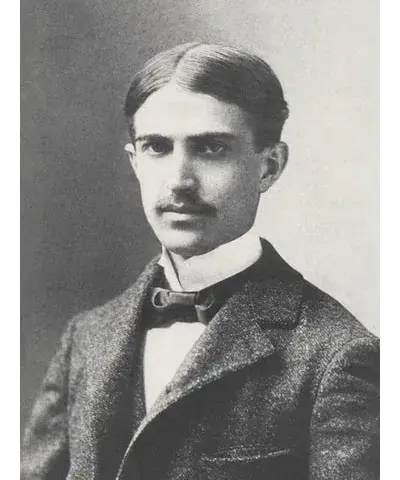
Stephen Crane was an American poet, novelist, and short story writer. Prolific throughout his short life, he wrote notable works in the Realist tradition as well as early examples of American Naturalism and Impressionism. He is recognized by modern critics as one of the most innovative writers of his generation.
