Saul Alinsky Quotes
A racially integrated community is a chronological term timed from the entrance of the first black family to the exit of the last white family.
Alinsky, Saul. Interview by Nat Hentoff. Playboy, Mar. 1972.


Jessie Helms was his young assistant who drafted this race baiting ad. There are two vicious but subtle aspects to this kind of attach ads. First, not that the ad does not address the problem of white men working along side of blacks. It only refers to wives and daughter. This interracial sex innuendo played on and increased the fear of whites that Blacks would commonly rape white women. The second nasty aspect of the ad is the specific attack on the opponent. Instead of saying that he favored desegregation, the phrase “mingling of the races” was used which implied that Graham was in favor of biracial intermarriage and children—again another sex innuendo. When integration of the workforce finally occurred in the South, there was no increase in Black men sexually assaulting white women. There has been a substantial increase in racial intermarriage however as racial bigotry has diminished in America.

This quotation illustrates one of the earliest major political dirty tricks. The pamphlet was published supposedly as a Republican campaign piece. The Democratic ploy was to turn votes from Abraham Lincoln to the Democratic candidate, George B. Mclellan. It also appears to be the first English usage of the word “miscegenation”. Lincoln was re-elected in spite of the Republicans being portrayed as radical race mixers.

Taft, very progressive on racial matters, was a little too optimistic. The “intelligent” Southerners were in the small minority. Only a week after Taft made this statement, Joseph Gorden, a Negro, was lynched outside Greenwood, Mississippi.


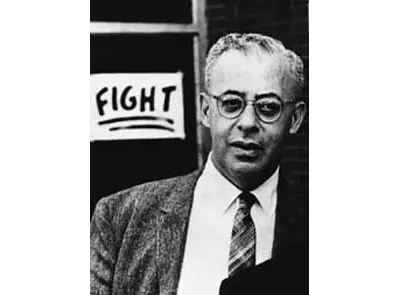
Saul David Alinsky was an American community activist and political theorist. His work through the Chicago-based Industrial Areas Foundation helping poor communities organize to press demands upon landlords, politicians and business leaders won him national recognition and notoriety. Responding to the impatience of a New Left generation of activists in the 1960s, in his widely cited Rules for Radicals: A Pragmatic Primer (1971) Alinsky defended the arts both of confrontation and of compromise involved in community organizing as keys to the struggle for social justice.
