H. G. Wells Quotes
A priest is a man vowed, trained, and consecrated, a man belonging to a special corps, and necessarily with an intense esprit de corps. He has given up his life to his temple and his god. This is a very excellent thing for the internal vigour of his own priesthood, his own temple. He lives and dies for the honour of his particular god. But in the next town or village is another temple with another god. It is his constant preoccupation to keep his people from that god. Religious cults and priesthoods are sectarian by nature; they will convert, they will overcome, but they will never coalesce.
Wells, H. G. The Outline of History: Being a Plain History of Life and Mankind, vol. 1, Macmillan, 1920, p. 251.


Religious zeal as a motive for terrorism has a long history.


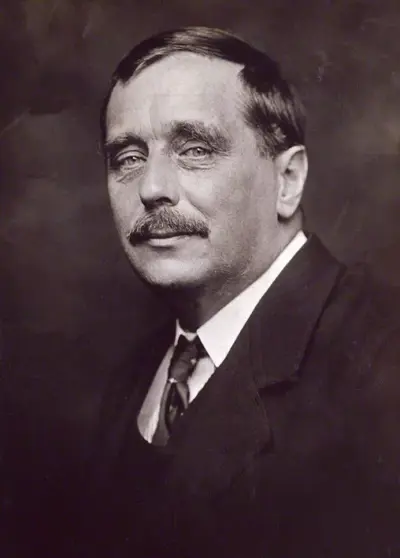
Herbert George Wells —known as H. G. Wells—was a prolific English writer in many genres, including the novel, history, politics, social commentary, and textbooks and rules for war games. Wells is now best remembered for his science fiction novels and is called a "father of science fiction", along with Jules Verne and Hugo Gernsback.[a] His most notable science fiction works include The Time Machine (1895), The Island of Doctor Moreau (1896), The Invisible Man (1897), and The War of the Worlds (1898). He was nominated for the Nobel Prize in Literature four times.
