Elie Wiesel Quotes
A religious person answers to God, not to the elected or non-elected official.
Wiesel, Elie. Elie Wiesel: Conversations. Edited by Robert Franciosi, University Press of Mississippi, 2002.

Niemoller, a World War I U-boat commander and clergyman, was jailed for rejecting the National Socialist ideology and for appealing to German Christians not to embrace the new paganism of Nazism and Fascism.


In what may have been amongst the lowest intellectual discussions regarding religion, the mores of the time was that slaves belonged to the slave owners and just as the owner had all power over the slave, he could also select the religion of the slaves as well. From a Christian point of view, freedom to be a Christian was critical, so what was to be the position and law regarding non-Christian slave owners, especially the Jews. Should property rights be dominant as was the tradition or should the Church have the right to dictate the religion of slaves? At no point in the discussion was the possibility even considered that the individual slave might have the right to select his/her religion. As a practical matter, at the time there were relatively few Jewish slave-holders, but as the Jews integrated into Christian society many assimilated—especially the wealthy who also traded and bartered with slaves. Muslims were not a problem as the newly emerging religion prohibited Muslims from holding other Muslims as slaves—although Christians and Jews could be held in servitude and were.


Congress had passed the Edmunds Act prohibiting plural marriage. Taylor, who himself had 7 wives and 35 children, went “underground” and secretly operated the church from exile.

Watchtower Bible and Tract Society of New York


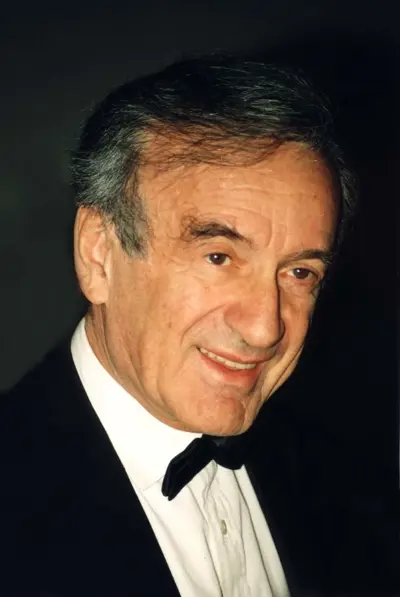
Elie Wiesel was a Romanian-born American writer, professor, political activist, Nobel laureate, and Holocaust survivor. He authored 57 books, written mostly in French and English, including Night, a work based on his experiences as a Jewish prisoner in the Auschwitz and Buchenwald concentration camps.
