Jimmy Breslin Quotes
A politician finds anything to do with racial problems far more frightening than a gun.
Breslin, Jimmy. The World of Jimmy Breslin. Viking Press, 1967.


Moynihan was actually not the political originator of the "benign neglect" phrase which became so controversial. It had been first used by The Earl of Durham in his 1839 Durham Report on the English policy towards Canada.


Nixon, in his second attempt to win the Presidency was told by a small group of Southern Republican politicians that his support was wavering in the South. They had already left the Democratic Party in reaction to the Passage of the 1964 Civil Rights Act. They were concerned because in order to try and capture some of the more liberal anti-war Democrats, Nixon had been making speeches advocating the vigerous enforcement of of civil rights and improving the lot of the Negro. But Nixon could not afford to lose his political base inb the south. Hence the promise which did not keep very long after he was elected President. Nixon was not a strong civil rights President, but he was totally without principles and had no political idiology he would sacrifice any of his political capital for. So once he was elected, he didn't want to offend the centerists whose support he needed for his legislatrive program so he did pay lip service to the prinicples of equality when he himself was anti-Black, andti-Semitic and prejudiced in many areas including against intelelctuals.


A Black church had been bombed in Birmingham, Alabama among the general racial indignity visited upon the Blacks of that city. King’s conversation was not generally known until 2003 when the secretly recorded conversations of the Kennedy Presidency were released, transcribed and analyzed. Shortly after the conversation, JFK called five white leaders of Birmingham and upbraided them about the lack of progress in Birmingham.


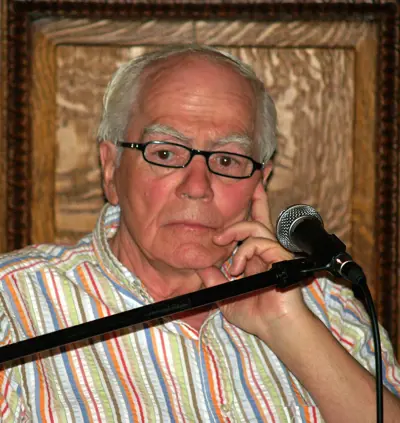
James Earle Breslin was an American journalist and author. Until the time of his death, he wrote a column for the New York Daily News Sunday edition. He wrote numerous novels, and columns of his appeared regularly in various newspapers in his hometown of New York City. He served as a regular columnist for the Long Island newspaper Newsday until his retirement on November 2, 2004, though he still published occasional pieces for the paper until his death. He was known for his newspaper columns which became the brash embodiment of the street-smart New Yorker, chronicling wise guys and big-city power brokers but always offered a sympathetic viewpoint of the working-class people of New York City, and was awarded the 1986 Pulitzer Prize for Commentary "for columns which consistently champion ordinary citizens".
