Edmund Burke Quotes
A point concerning property, which ought, for the reasons I have just mentioned, to be most speedily decided, frequently exercises the wit of successions of lawyers, for many generations .… But the question concerning a man’s life, that great question in which no delay ought to be counted tedious, is commonly determined in twenty-four hours at the utmost. It is not to be wondered at that injustice and absurdity should be inseparable companions.
In modern America, we have improved somewhat. Now both kinds of issues take many years.
Edmund Burke, 1729-1797, Irish Orator & Member of the British Parliament, Vindication of National Society, 1756
Sourced by: Eigen's Political and Historical Quotations


There is a constant tension between swift justice and due process. Some say that “justice delayed is justice denied” but at the same time the worst injustice is to rush to judgment and convict the wrong person or fail to convict the perpetrator because the prosecution was insufficiently prepared. Both are major problems of our criminal justice system.

He was a Protestant liberal and opposed to the English rule of Ireland and the discrimination against the Catholics. To make an example to inhibit Irish protestants from joining the Society of United Irishmen, he was accused of giving an oath to a British Soldier that he would support Irish independence. This had been made a capital crime shortly before. Actually, it was another member of the Society who administered the oath, but the prosecutor arranged for perjured testimony to convict the more prominent Orr. His execution was remembered by liberal Catholics and Protestants alike and in the rebellion the following year the rebel battle cry was “Remember Orr”.


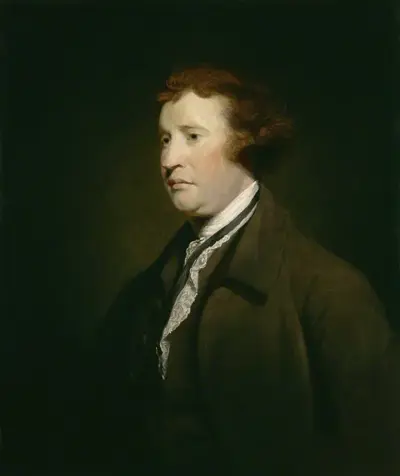
Edmund Burke was an Irish statesman, economist, and philosopher. Born in Dublin, Burke served as a member of parliament (MP) between 1766 and 1794 in the House of Commons of Great Britain with the Whig Party after moving to London in 1750.
