Henry Cockburn Quotes
A most atrocious jail it was … the entire hole being filled with little dark cells … airless, waterless, drainless, a living grave.
Henry Cockburn, *, Scottish Writer and Historian, Memorial of his time, 1856
Sourced by: Eigen's Political and Historical Quotations

Russia, under the Czar, had a brutal criminal justice system where criminals—often with their families—were forced across Russia to Siberia and Sakhalin. Stalin and the Communists did not invent the Gulag concept but then, although total enemies of the Czar and everything he stood for, emulated the worst of Czarist policies to deal with the Russian “enemies” of the state. The reference to “red-nosed prison supervisors” was to the image of the alcoholism that was (and still is) rampant among so many Russians—especially the prison supervisors who themselves were exiled to the harshest and remotest parts of the nation. They were notoriously heavy drinkers even be Russian standards.


The sheriff created a tent city to house inmates.


As a Federal Judge, she was obligated to sentence people guilty of certain crimes to a minimum sentence prescribed by law and a sentencing commission.


There is not much difference between England then and America now.


Criticism of the prison system comes from the right as well as the left.


The most common example that capital punishment does not work as a deterrent is that while thieves were being hung for their crime, other thieves would circulate among the watching crowd at the scaffold and pickpocket the observers.


This is an amazingly intellectually advanced quotation. Herman Helcher, was a former pupil of hers who had become mentally deranged and tried to murder her and left her permanently injured. She not only argued against the jailing of a mentally ill person, but she recognized mental illness for what it is—a disease of the brain. This concept was not appreciated by most American politicians or constituents even into the 21st century.
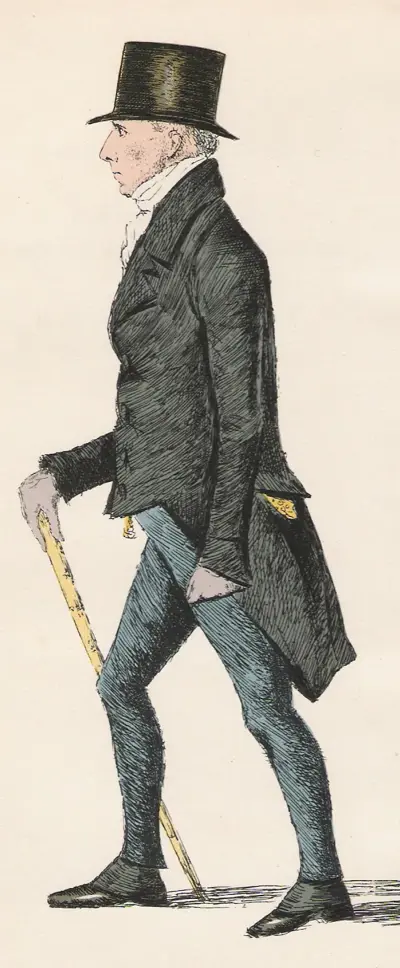
Henry Thomas Cockburn of Bonaly, Lord Cockburn was a Scottish lawyer, judge and literary figure. He served as Solicitor General for Scotland between 1830 and 1834.
