Arthur Schopenhauer Quotes
A man's knowledge may be said to be mature, in other words, when it has reached the most complete state of perfection to which he, as an individual, is capable of bringing it, when an exact correspondence is established between the whole of his abstract ideas and the things he has actually perceived for himself. His will mean that each of his abstract ideas rests, directly or indirectly, upon a basis of observation, which alone endows it with any real value; and also that he is able to place every observation he makes under the right abstract idea which belongs to it.
Schopenhauer, Arthur. Studies in Pessimism: A Series of Essays. Translated by T. Bailey Saunders, Swan Sonnenschein & Co., 1893, p. 130.


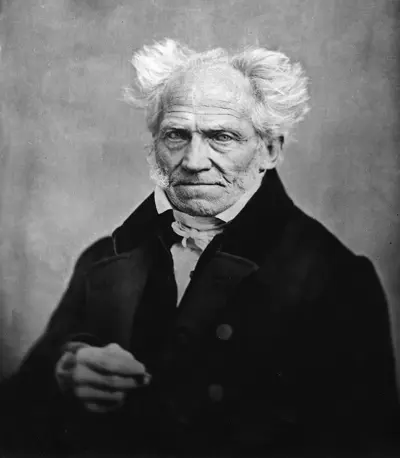
Arthur Schopenhauer was a German philosopher. He is best known for his 1818 work The World as Will and Representation (expanded in 1844), which characterizes the phenomenal world as the product of a blind and insatiable noumenal will. Building on the transcendental idealism of Immanuel Kant, Schopenhauer developed an atheistic metaphysical and ethical system that rejected the contemporaneous ideas of German idealism. He was among the first thinkers in Western philosophy to share and affirm significant tenets of Indian philosophy, such as asceticism, denial of the self, and the notion of the world-as-appearance. His work has been described as an exemplary manifestation of philosophical pessimism.
