Gilles Deleuze Quotes
A leftist government doesn't exist because being on the left has nothing to do with governments.
Deleuze, Gilles. L'Abécédaire de Gilles Deleuze, avec Claire Parnet. Directed by Pierre-André Boutang, Éditions Montparnasse, 1996.


He is using the word America to denote North, South and Central America.


Often called Blackshirts. He is one of the few politicians in the world who saw Fascists and Nazis in the middle of the political spectrum.

Left and right as political concepts are very subjective and relative. When Obama won the Presidency, the Republican Party and swung far to the right—so far that Rockefeller, Eisenhower and others would not be acceptable to the party. Most of the Republicans saw Obama as an extreme leftist while at the same time, most of the leftists in the Democratic Party like Reich were unhappy with Obama as he was too conservative—almost a Republican.

The Tea Party Republican faction was opposed to government doing much of anything other than Defense and Foreign Policy. The regular Republicans saw a much more extensive and robust role of government though few did so to the same extent as Abraham Lincoln and the other founders of the Republican Party, and Theodore Roosevelt and Dwight D. Eisenhower the Republicans following in the Alexander Hamilton tradition.


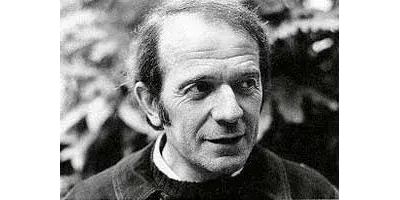
Gilles Deleuze was a French philosopher who, from the early 1950s until his death in 1995, wrote on philosophy, literature, film, and fine art. His most popular works were the two volumes of Capitalism and Schizophrenia: Anti-Oedipus (1972) and A Thousand Plateaus (1980), both co-written with psychoanalyst Félix Guattari. His metaphysical treatise Difference and Repetition (1968) is considered by many scholars to be his magnum opus. An important part of Deleuze's oeuvre is devoted to the reading of other philosophers: the Stoics, Leibniz, Hume, Kant, Nietzsche, and Bergson, with particular influence derived from Spinoza. A. W. Moore, citing Bernard Williams's criteria for a great thinker, ranks Deleuze among the "greatest philosophers". Although he once characterized himself as a "pure metaphysician", his work has influenced a variety of disciplines across the humanities, including philosophy, art, and literary theory, as well as movements such as post-structuralism and postmodernism.
