Max Weber Quotes
A highly developed stock exchange cannot be a club for the cult of ethics.
Weber, Max. "The Stock Exchange." Theory and Society, vol. 29, no. 3, 2000, p. 331.

The New York Stock Exchange had closed for the day after the assassination of President Kennedy. Lyndon Johnson called Funston to express his appreciation:


When the stock market crashed, the Board of Governors was entertaining the idea of putting a syndicate of banks together or back some financiers who would buy up the stock that people were trying to sell. There were those who wanted to sell but no buyers at any price. They concept of a market was being destroyed. Lamont correctly explained that the idea was not practical—it was too late for that. Lamont however had underestimated the market crash and made a feeble effort to assist President Hoover make his feeble effort to get the American economy going again.


At the time, the financial industry spent more money for lobbyists and campaign contributions than any other sector of the economy. The result is that they had extraordinary access to and influence upon members of Congress and their staffs, that more often than not, the actually drafted the language for laws, amendments and regulations and then les the strategy to pass the legislation or finalize the rule. Moreso than any other industry, they wrote their own rules. Even after the Meltdown of 2008 and the Great Recession where there was a public outcry for reform, the Dodd Frank legislation was influenced by the industry and after passage most of the rules and interpretations were written by the industry or greatly influenced by them.


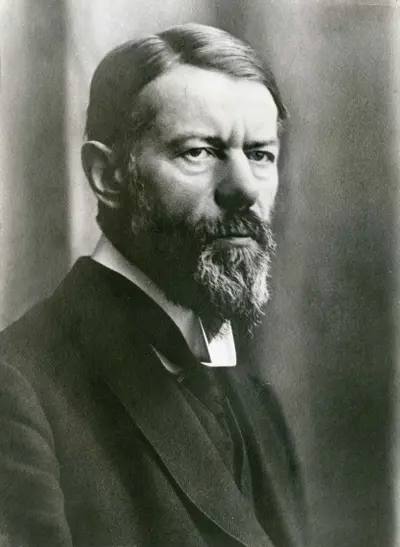
Maximilian Karl Emil Weber was a German sociologist, historian, jurist, and political economist, who is regarded among the most important theorists on the development of modern Western society. His ideas would profoundly influence social theory and social research. Despite being recognized as one of the fathers of sociology, along with Auguste Comte and Émile Durkheim, Weber never saw himself as a sociologist, but as an historian.
