Samuel Pierpont Langley Quotes
A great universal highway in the sky … soon to be opened.
It is perhaps ironic that Langley had the vision of air flight while Wilber Wright, the inventor of the first airplane a few years later, saw it’s role much more limited. See: {42182}.
Samuel Pierpont Langley, 1834-1906, Astronomer, Quoted in Judy Crichton, America 1900
Sourced by: Eigen's Political and Historical Quotations

His father, Henry Ford, did not agree that the Airplane would be so important, but the son’s vision made Ford the largest airplane manufacturer in America.


Cayley developed the first gliders and envisioned air travel at the same time that Thomas Jefferson was President.

Ataturk quickly envisioned the importance of the airplane. He even sent is daughter to Russia to learn to fly a plane, and she became the first Turkish Military Officer to do so. This was typical of Ataturk—killing two or more reform “birds” with one stone. He not only brought the airplane into the Turkish consciousness by having his daughter fly which attracted great attention of the press and got people talking, but showed that women were capable of the most complex technological tasks. Before Ataturk, few women in Turkey ever did anything but parenting and homemaking. Ataturk gave Turkish women the vote before America adopted women’s suffrage.


He was trying to develop an airplane the decade before the Wright Brothers succeeded. However their work did not emerge out of thin air. They had read Chanute’s reports and credit him with a number of their ideas. Chanute, like the Wright Brothers and oither early air pioneers were optimists about the utility of the airplane as well as its feasibility.

You simply do not do that to a head of a democratic state wanting to cross [fly] over your airspace.
American (traitor of whistleblower depending on who is judging) Edward Snowden was in the Moscow International Airport seeking political asylum from several nations. The United States, wanting to extradite and try Snowden criminally had “intelligence” that Snowden was going to fly out of Russia in the private plane of Bolivian President Morales. The U.S. persuaded the European countries to refuse his plan “flyover” rights—usually a formality that is always granted for a foreign head of state. This forced Morales to land his plane for refueling in Austria where, under pressure from the United States, Austrian law enforcement officials boarded and searched the plane—something that is almost never done to a plane that is just refueling, much less the airplane of a head of state. The Secretary General was expressing the outrage of the OAS nations (and many others around the world). What made the situation even more embarrassing for the United States, Austria, and the other European nations which did not grant flyover rights, was the fact that the U. S. Intelligence was totally wrong. Snowden was not on the plane forcing the Austrians who had technically committed an act of war against Bolivia by forcing their way onto a Bolivian plane carrying diplomats and the president of Bolivia, to apologize. Snowden was still in Russia, and the Russians then gave him political asylum in large part because they too resented the behavior of Austria, Europe and above all the United States in the Bolivian plane incident as the pane had taken off from Moscow. This was a very difficult call for the American intelligence agencies, in that there may well have been a plan to put Snowden in that plane that was cancelled when it was clear that the Americans would try and intercept the plane somehow. The OAS and other complaining nations argued that even if Snowden had been on the plane, there was no right to intercept and search the plane anyway.
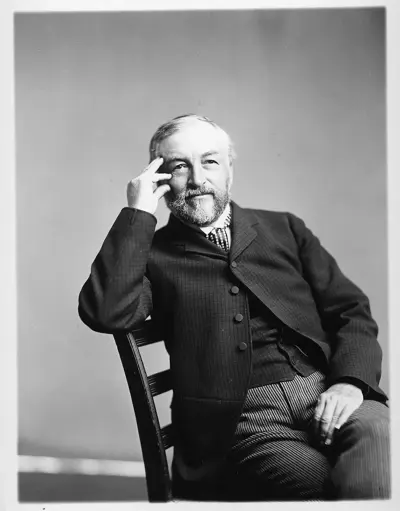
Samuel Pierpont Langley was an American astronomer, physicist, inventor of the bolometer and aviation pioneer. In addition to becoming the third Secretary of the Smithsonian Institution, he was also a professor of astronomy at the University of Pittsburgh, where he was the director of the Allegheny Observatory.
