Lord Kelvin Quotes
Heavier-than-air flying machines are impossible.
Lord Kelvin, 1824-1907, William Thompson, British Scientist and President, Royal Society, 1895
Sourced by: Eigen's Political and Historical Quotations


Two years later he flew. That is how fast and dramatic the Wright Brothers work had gone. Once they got on the right track, everything began to fall into place. Two years earlier he had been optimistic. See {613170}.


Four years later he flew, but he became pessimistic along the way. See {613169}.

Born in the Ukraine to middle class parents, he became an successful engineer in Russia before he emigrated in 1919. America has not only been a magnet for the persecuted and the poor but highly skilled, and educated people came to America for the opportunity to further their career. No companies in Europe were then interested in producing large airplanes. In America, within 4 years he started his own company. He helped to design the famous Pan American Airways Flying Boats and in 1942 his company developed the world’s first production helicopter. He might have done that in France, Russia or elsewhere but he chose America like millions of other immigrants.

Cayley developed the first gliders and envisioned air travel at the same time that Thomas Jefferson was President.

Ataturk quickly envisioned the importance of the airplane. He even sent is daughter to Russia to learn to fly a plane, and she became the first Turkish Military Officer to do so. This was typical of Ataturk—killing two or more reform “birds” with one stone. He not only brought the airplane into the Turkish consciousness by having his daughter fly which attracted great attention of the press and got people talking, but showed that women were capable of the most complex technological tasks. Before Ataturk, few women in Turkey ever did anything but parenting and homemaking. Ataturk gave Turkish women the vote before America adopted women’s suffrage.


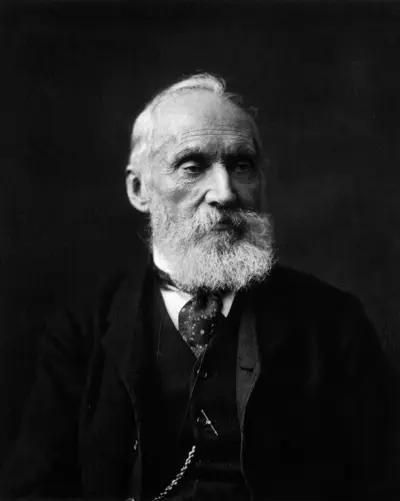
William Thomson, 1st Baron Kelvin, OM, GCVO, PC, PRS, FRSE was a Irish-British mathematical physicist and engineer born in Belfast. Professor of Natural Philosophy at the University of Glasgow for 53 years, he did important work in the mathematical analysis of electricity and formulation of the first and second laws of thermodynamics, and did much to unify the emerging discipline of physics in its modern form. He received the Royal Society's Copley Medal in 1883, was its President 1890–1895, and in 1892 was the first British scientist to be elevated to the House of Lords.
