Philip Gibbs Quotes
A friend in the War Office warned me that I was in Kitchener's black books, and that orders had been given for my arrest next time I appeared in France.
Gibbs, Philip. Adventures in Journalism. Harper & Brothers, 1923.


The day before, Helms’ deputy testified about the high number of civilian casualties that American bombing of North Vietnam had caused.


Although the FBI had identified the emerging Nazi danger in the United States as early as 1933, the military, and the Congress were not aware of their findings. Nor were the media and the public.


The general was replacing George S. Patton as commander of the Third Army. Patton had opposed the deNazification policy of the allies and caused a great deal of public relations difficulty for the army command and the administration, as reporters would frequently print his views. Truscott was one of Patton’s loyal assistants. The minute he took over, the press wanted to find out if his views were the same as his former boss regarding the Nazis. They were quite different. Reporters had no story.

Truman had been briefed on the number of Japanese who committed suicide rather than surrender—including civilians—in Saipan, Okinawa, Iwo Jima, and other locations where United States troops had invaded. He and his experts agreed that the Japanese would not surrender unless there was a new dramatic factor that was outside the usual thinking—the atomic bomb. He was proved right about the warning. Not only did the Japanese ignore it, but they did not even surrender after the nuclear devastation at Hiroshima. It took a second bomb dropped on Nagasaki to motivate the surrender. So even a demonstration with all those Japanese casualties did not cause the surrender until it was repeated.


In 1937 four nationalist army columns were converging on Madrid in the Spanish Civil War. General Mola was asked which column would take Madrid. His reference to the sympathizers inside the city became a universal term for traitors.

Abu Ghraib was the prison in Iraq where prisoners were brutalized and treated illegally and immorally. Seymour Hirsh was the Pulitzer Prize-winning investigative journalist who broke the story. Levy contrasted that where the Algerian War was full of such atrocities but French intellectuals and press would not publicize it. It didn’t stop for the whole war.
One of the predictions of the oncoming war with Germany.

He was arguing for a preemptive attack rather than wait to be attacked.


The line was delivered by Sellers playing the President of the United States in a War Room crisis.
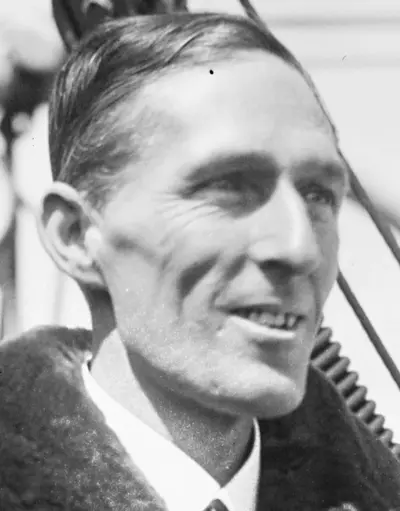
Sir Philip Armand Hamilton Gibbs KBE was an English journalist and prolific author of books who served as one of five official British reporters during the First World War. Four of his siblings were also writers, A. Hamilton Gibbs, Francis Hamilton Gibbs, Helen Hamilton Gibbs, and Cosmo Hamilton, as was his father Henry James Gibbs, and his own son, Anthony.
