John Stuart Mill Quotes
A female slave has (in Christian countries) an admitted right, … to refuse to her master the last familiarity. Not so the wife: however brutal a tyrant she may unfortunately be chained to
John Stuart Mill, 1806-1873, Member of Parliament, British Political Economist, The Subjugation of Women, 1869
Sourced by: Eigen's Political and Historical Quotations


There were very few public figures of any kind who would even talk about the problem of marital rape. She was one of those and attracted huge audiences. Unfortunately, marital rape is much still with us although there have been some prosecutions beginning in the latter part of the 20th century.


A daughter’s behavior is a reflection of the family and its honor. If a girl is unchaste, it is the duty of the father or other male relatives to kill the girl. However, this proverb warns about hearsay and gossip causing action which would have been unjust and regretted later.


Vladimir Lenin


The logic of this quotation is irrational and faulty but exists the world over. Someone is told to refrain from certain activities because others will be offended and resort to immoral and illegal activities. This is what was said to the Orangemen of Ireland parading in Catholic areas and the reverse. Or women were warned against certain kinds of dress less they be raped. See {623723} .

“Political correctness” is a loosely defined concept of not discussing political issues in terms that are derogatory and/or might be offensive to particular groups or nationalities. Many orthodox Muslims (and orthodox Christians) are of the opinion that their religion calls for the male being the dominant figure in the household and having the right and obligation to discipline the children and the wife or wives. To state that such a practice is sexist, barbaric, undemocratic, and damaging to family and society is an insult to some of these religious believers. The Egyptian law was passed to reflect God’s commandments and so to question it is to some, blasphemous and for other nations to criticize it is insulting to some ultra orthodox Muslims. However, in cases like these, Ms. Eltahawy argues for ignoring political correctness and most Americans would agree as would most of the modern and generally educated Muslims in Egypt.
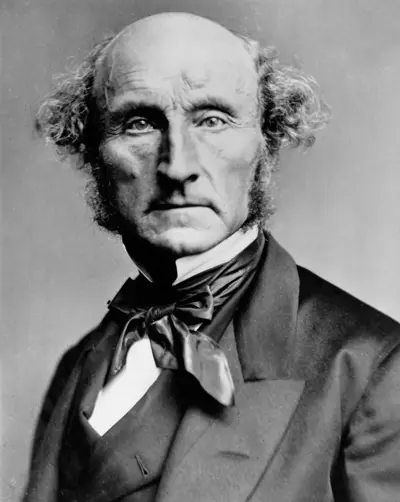
John Stuart Mill, usually cited as J. S. Mill, was an English philosopher, political economist, Member of Parliament, and civil servant. One of the most influential thinkers in the history of classical liberalism, he contributed widely to social theory, political theory, and political economy. Dubbed "the most influential English-speaking philosopher of the nineteenth century", he conceived of liberty as justifying the freedom of the individual in opposition to unlimited state and social control.
