John Stuart Mill Quotes
The vilest malefactor has some wretched woman tied to him, against whom he can commit any atrocity except killing her, and, if tolerably cautious, can do that without much danger of the legal penalty.
John Stuart Mill, 1806-1873, Member of Parliament, British Political Economist, The Subjugation of Women, 1869
Sourced by: Eigen's Political and Historical Quotations


Paglia was an anti feminist. She never studied the intimidation effect of men who threaten their spouse’s lives if they are abandoned and each year many spouses and girlfriends are murdered for just that reason. Nor has she studied the millions of women who have no way to make a living yet have children to support who then stay with an abusive partner.


“Political correctness” is a loosely defined concept of not discussing political issues in terms that are derogatory and/or might be offensive to particular groups or nationalities. Many orthodox Muslims (and orthodox Christians) are of the opinion that their religion calls for the male being the dominant figure in the household and having the right and obligation to discipline the children and the wife or wives. To state that such a practice is sexist, barbaric, undemocratic, and damaging to family and society is an insult to some of these religious believers. The Egyptian law was passed to reflect God’s commandments and so to question it is to some, blasphemous and for other nations to criticize it is insulting to some ultra orthodox Muslims. However, in cases like these, Ms. Eltahawy argues for ignoring political correctness and most Americans would agree as would most of the modern and generally educated Muslims in Egypt.


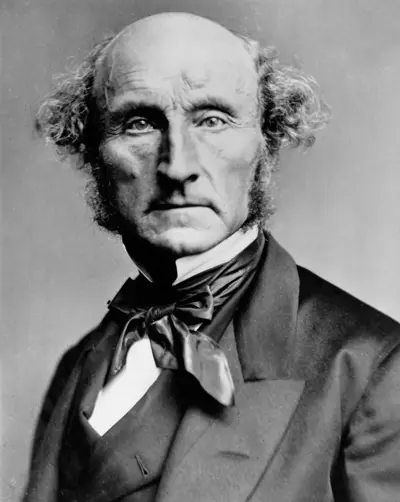
John Stuart Mill, usually cited as J. S. Mill, was an English philosopher, political economist, Member of Parliament, and civil servant. One of the most influential thinkers in the history of classical liberalism, he contributed widely to social theory, political theory, and political economy. Dubbed "the most influential English-speaking philosopher of the nineteenth century", he conceived of liberty as justifying the freedom of the individual in opposition to unlimited state and social control.
