Pierre-Joseph Proudhon Quotes
A common danger tends to concord. Communism is the exploitation of the strong by the weak. In Communism, inequality comes from placing mediocrity on a level with excellence.
Proudhon, Pierre-Joseph. What is Property? An Inquiry into the Principle of Right and of Government. Translated by Benjamin R. Tucker, B. R. Tucker, 1876, p. 250.

He was a strong opponent of communism (see {586209} and {586210}) but was also skeptical of unbridled capitalism.

He was a strong foe of both Communism and Capitalism. He was one of the first critics to describe the de facto inequality of Communism.


And as the leader of the exploited, after his revolution he became a dictator himself, albeit a very popular one amongst most Cubans.


Most Americans looked at anarchists as communists. They generally were not, and opposed state communism as much as state capitalism. In many ways they distrusted government the way some modern libertarians do.

3rd Earl Russell of Kingston. He favored and argued for a middle ground of a capitalistic socialism or a socialized capitalism, which is what most democracies became.


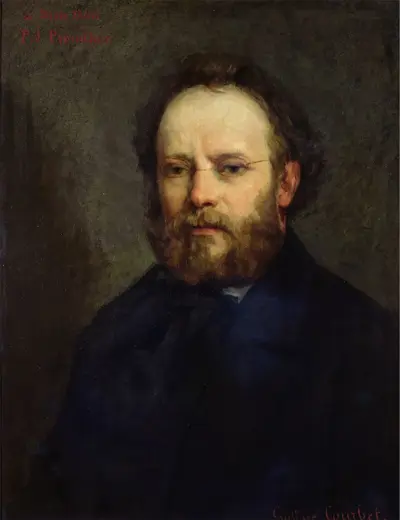
Pierre-Joseph Proudhon was a French socialist, politician, philosopher, economist and the founder of mutualist philosophy. He was the first person to declare himself an anarchist, using that term and is widely regarded as one of anarchism's most influential theorists. Proudhon is considered by many to be the "father of anarchism". Proudhon became a member of the French Parliament after the Revolution of 1848, whereafter he referred to himself as a federalist. Proudhon described the liberty he pursued as "the synthesis of communism and property". Some consider his mutualism to be part of individualist anarchism while others regard it to be part of social anarchism.
