Thomas Carlyle Quotes
… a gospel of dirt
Thomas Carlyle, 1795-1881, Scottish essayist and historian, Member of Parliament, Description of Scientist Charles Darwin’s Theory of Evolution, Quoted in The Atlantic Monthly, April 1908
Sourced by: Eigen's Political and Historical Quotations


Here the Governor makes a very common error of people who do not have scientific training. They believe that a Scientific Theory is an assertion that has not yet been proven. That is not the way scientists use the term. The Theory of Relativity, Theory of Quantum Mechanics and Theory of Evolution all scientifically refer to a major set of scientific statements and relationships that have been proven over and over again, together with many corollaries and deductions. It is an established, experimentally proven body of knowledge that is still producing additional hypotheses that then need to be proven or refuted. The scientific THEORY is as high as it gets on the scientific scale of proof. The word “theory” used in science is not one fact, but a large set of related facts and their proofs. What the Governor refers to, scientists call hypotheses or speculations. There have been many more proofs of evolution -–many thousands of them—than proofs of Relativity which is actually harder to prove and only has a few thousand proofs. More important, not one person has ever been able to prove scientifically that any of the assertions of evolution are false. Some religions have no difficulty with evolution (Roman Catholics for example) and a few do (fundamentalist Protestants for example). Governor Huckabee was also a fundamentalist Protestant minister. Even the Federal courts have held that the objections and so called “refutations” and alternatives to evolution are religious and not scientific, and hence may not be taught as science in public schools. Non evolution (like creationism) is a religious and cultural notion and should be studied as that.

This is a very good quotation showing the point of view of religious fundamentalists that if there is no fixed statement of ethics and morality as with the word of God as revealed in the Bible, what then makes anything right or wrong and the world exists in a moral behavioral vacuum. Other religionists hold that the morality is in the metaphors and philosophy of religion and not in the literal words of scripture. Still others argue that morality and religion itself is dynamic and is constantly changing. Then there are those who build their view of morality on philosophy but which is not based on a deity—Ethical Culturalists for example {592791}. Also, there are the pragmatic evolutionists who argue that cooperative behavior has evolved in man and cultural rules—morality—is also transmitted by culture and systems of law.
In the middle of the 19th century, there was an Anglican English Bishop by the name of Usher who was the first person to perform this “Biblical” analysis. Even then the absurdity of this claim was demonstrated over and over again with the science of the time. Most religious fundamentalists believe that the word “day” was really an unspecified period of time which might have been billions of years. Other religious theologians argue that the entire Genesis story was a metaphor and not meant to be taken literally. Today we know that our universe is over 18 billion years old, and the overwhelming proportions of the different animals and other life forms that have existed are long since extinct, while a few, like horseshoe crabs, are many millions of years old. New species are being created constantly. Even man, one of the more recent life forms, was well developed, had communities, and had spread over the world more than 6,000 years ago. We have archeological evidence of human life that goes back 10s of thousands of years. None-the-less, there are a number of American citizens who actually believe the 6,000 year claim, and they are entitled to their opinion regardless of how absurd it may seem to others. That is the great strength of a liberal democracy. Absurd seeming beliefs must be protected and respected. However, views that are so variant from known scientific reality may not be allowed to interfere with the teaching and public education to advocate a particular theological view and especially under the rubric of science.
The Creation Museum makes the Christian Fundamentalist Case for their alternative view of the creation of the earth and man. In the process, they make claims that are proven incorrect every day in science, like the earth is only about 6000 years old {641849} , and all the species on earth were then separately created in their immutable form with no evolutionary process. There are many deeply religious Christians who do not take the Bible literally and have no problem with evolution as the mechanism which God selected to create and develop life. The Roman Catholic Church, for example, does not maintain that the Bible is literally true and Evolution did not account for the development of life on earth. The major difference between most modern scientists, philosophers, and theologians, is that some believe that God of other Supreme Being had nothing to do with the evolution and development of life forms and those who believe that Evolution was the mechanism that God created and used. See {641848} for an example of the former.


This quotation is significant for several reasons. The 3 time candidate for President not only railed against anything having to do with evolution, but in this same year, participated as a prosecutor in the infamous Scopes Trial in Tennessee where a school teacher was convicted of a crime for discussing the idea of evolution in a high school classroom. In this case, he attacked anthropologist Henry Fairfield Osborn who had hypothesized that a fossilized tooth he had found might have come from a humanoid predecessor of Homo Sapiens. Bryan of course ignored the even then overwhelming evidence of evolution as a mechanism. He was actually right in criticizing Osborn in this case although Bryan had no real evidence for it. Two years later, Osborn published a retraction and correction indicating that better tools and methods of analysis indicated that the tooth was from a primitive species of pig and not of a pre human.


The “experts” were scientists and science educators who had testified that Creationism, a notion that some religious Christians believe is a more valid explanation of the development of plants and animals than is Evolution, is a religious belief, not a science and should not be taught in a science curriculum. McLeroy believed that even in teaching science, scientific thinking and expertise should not be given more weight than religion in general and Christianity in particular. Some fundamentalist Protestants find Evolution distressing in that it contradicts the literal Biblical narrative. Other Protestants, Jews, and Catholics do not see anything in Evolution that conflicts with their spiritual view of God. They see Evolution as the mechanism that God created for the development of life. McLeroy was defeated in the next election after taking this anti scientific position, and was replaced with another fundamentalist Protestant—but one who did not believe that a particular Protestent, Christian view of the world which scientists generally reject should be taught as science in public schools.
Bryan participated as a prosecutor in the infamous Scopes Trial in Tennessee where a school teacher was convicted of a crime for discussing the idea of evolution in a high school classroom. This view of opposition to Evolution was actually considered too liberal by many other Biblical Fundamentalists. They were just as distressed about the other animals as well as man. Evolution explicitly contradicted the literal story of Biblical creationism and therefore was blasphemy.
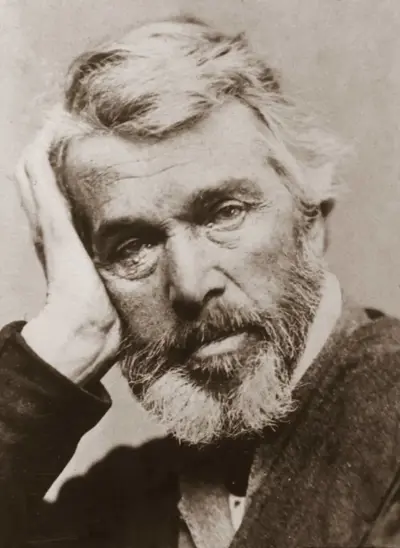
Thomas Carlyle was a Scottish historian, satirical writer, essayist, translator, philosopher, mathematician, and teacher. In his book On Heroes, Hero-Worship, and The Heroic in History (1841), he argued that the actions of the "Great Man" play a key role in history, claiming that "the history of the world is but the biography of great men". Other major works include The French Revolution: A History, 3 vols (1837) and The History of Friedrich II of Prussia, Called Frederick the Great, 6 vols (1858–65).
