
Context: He was right. Even the vaunted Southern Filibuster was broken by the strategy and tactics Johnson and Senator Humbert Humphry, the Floor Leader for the 1964 Civil Rights Bill.
LYNDON B. JOHNSON
(Lyndon Baines Johnson)
Context: In the Vietnam War, America and her allies were defending the South Vietnamese from the Communist and Nationalist incursions of the North Vietnamese. However, the South Vietnamese government was itself a very fragile democracy which provided rights little better than the Ho Chi Min lead government of the North. Further, the South Vietnamese rulers and governments while claiming to be democracies, were little more than in name only and were very corrupt. As with many unstable and weak governments, South Vietnam had experienced a succession of coups, with some of his advisors favoring the coups and a few actualy supporting them. Johnson was continually frustrated by this and this expression was his own inimitable style.
Context: During the Vietnam war, some senior military leaders urged use of atomic weapons. They reported the results of a computer simulation the Pentagon had done on the number of lives that had been saved by use of the atomic bomb in World War II:
Context: Referring to reporter, Sarah McClendon
Context: Johnson believed that the press and the body politic was particularly critical of him and very favorable towards the Kennedys. He referred to the incident at Chappaquiddick where a young woman in Edward Kennedy's car had been drowned and Kennedy was only convicted of a misdemeanor:
Context: The President was facing an imminent close defeat in the Congress and needed to tip the scales. He called one of the leaders who was opposed to his position and explained that he didn’t want to lose face. This was a classic Johnson proposal where the quid pro quo was not even subtle. Johnson got the vote of the leader’s bloc and indeed did reciporicate later.
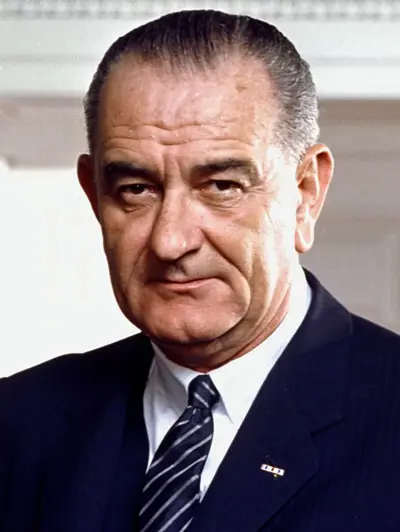
Lyndon Baines Johnson, often referred to by his initials LBJ, was the 36th president of the United States, in office from 1963 to 1969. He served as the 37th vice president from 1961 to 1963 and assumed the presidency following the assassination of President John F. Kennedy. A Democrat from Texas, Johnson was also a United States representative and later majority leader in the United States Senate. Johnson is one of only four people to have served, at various times, in all four federal elected positions.
Related Authors
