J. William Fulbright Quotes
You're bombing that little piss-ant country up there [Vietnam], and you think you can blow them up. You've been doing this all the time. It's a bunch of crap about wanting to negotiate.
J. William Fulbright, 1905-1995, U. S. Senator (Democrat, AR), Chairman, Senate Foreign Relations Committee, Meeting with Johnson administration strategists, 1967, Quoted in Miller, Lyndon: An Oral Biography, Putnam, 1980
Sourced by: Eigen's Political and Historical Quotations

See Antoine Boulay de la Meurthe for a similar statement over a century earlier.


Islamic extremists had killed thousands on Russian citizens and military men in Chechen, one of the states in Russia. At the time--before 9-11--Americans in the homeland had never been attacked by Islamic religious extremists as the Russians had. Some Americans were very critical of the Russians for using force and troops to deal with the terrorists and urged Putin to negotiate. This was Putin's reply. It was taken by many Americans as an unnecessarily hard line then. After 9-11, however, American views towards negotiations with terrorists generally resembled Putin in this quotation. Many Americans then developed much more sympathy with the Russian position on terrorism inside Russia.


The culture of Iraq and the Desert tribes made raiding and looting of other villages or travelers or caravans a way of life. The British occupiers were determined to put an end to it and Harris, a young officer, developed the retaliation of bombing the village of the raiders and their warlords. This appears to be the beginning of destroying of houses in the Middle East as a method of retaliation and punishment which would be adopted so well by the Israelis as a humane method and they often quoted Harris saying: “we put them to the maximum amount of inconvenience, without physical hurt, and they soon stopped their raiding and looting.”

The Germans wanted war with Serbia and used the dispute between Austria and Serbia as an excuse to mobilize and go to war ostensibly to protect their ally, the Austrian Empire, from the Serbs who they knew would be likely supported by Russia which had traditionally supported their fellow Eastern Orthodox against Roman Catholic or Protestant enemies. Russia still tends to protect and support the Serbs. This statement was one of the many that showed that Germany was the major aggressor in the First World War and therefore had to pay reparations to France and others.


After the attack on Fort Sumter, the South Sent “diplomats” to negotiation with the Government. Unfortunately for all, the South really was not open to negotiations as they only had two predetermined positions they would agree to: The first was that the Government should guarantee the perpetual right of states to have slavery if they wished and that fugitive slaves would be returned by the non-slave states. The second was that the Union should recognize the Confederacy as an independent nation and have peaceful relations between the two. The first was impossible to deliver even if the Union would agree to continue slavery, there was no way that the Federal Government could enforce the return of fugitive slaves from many northern states where they were free the second they set foot in the state, and the Northern states demanded States Rights and not being forced to return Fugitive Slaves forcing the Southern States to oppose States Rights when it came to Fugitive Slaves while favoring it for slavery itself. The Federal government could not enforce the Dred Scott Decision under the pro-South Buchanan administration. And Lincoln and most of the Northern Politicians would not accept a complete dissolution of the Union. There are no other possibilities the South would accept and there was really nothing to negotiate.


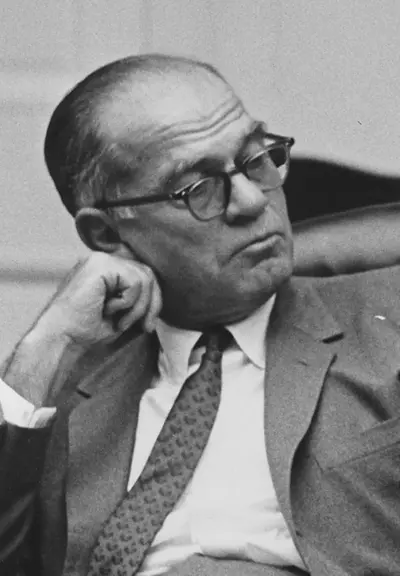
James William Fulbright was an American politician, academic, and statesman who represented Arkansas in the United States Senate from 1945 until his resignation in 1974. As of 2021, Fulbright is the longest serving chairman in the history of the United States Senate Committee on Foreign Relations. He is best known for his staunch multilateralist positions on international issues, opposition to American involvement in the Vietnam War, and the creation of the international fellowship program bearing his name, the Fulbright Program.
