Joseph Stiglitz Quotes
You saw on your TV what happened in New Orleans after Hurricane Katrina. The Reserves or National Guard are usually the people we use for those national emergencies. They weren't here, they were over in Iraq, and so we were less protected.
Stiglitz, Joseph E., and Linda J. Bilmes. The Three Trillion Dollar War: The True Cost of the Iraq Conflict. W. W. Norton & Company, 2008.


Unlike terrorism and natural disasters like earthquakes, a hurricane is known about a week in advance and can be tracked as it makes landfall. So his view was that the prime failure of FEMA and the Department of Homeland Security occurred the week earlier. In addition a few weeks before Katrina, Leibersbach lead a delegation of State Homeland Security Directors to meet with Secretary Chertoff of Homeland Security. Their message was that the reorganization of DHS has so downgraded FEMA that the nation’s capacity to deal with national disaster had been diminished as a result of the reorganizations.


This quotation shows the naivety of the Islamic terrorists about America. They assumed that because the Federal Government did not send help to New Orleans and other communities hit by the hurricane, it was because there was a shortage of military personnel to send and they took credit for tying down all the troops. They just could not accept the possibility that some American administrations were totally incompetent and were not be prepared or that an American President could appoint someone with no real qualification. Ironically, they would believe that of the Arab countries in the Middle East, but not the vaunted USA. The terrible response to Katrina had nothing to do with the shortage of troops and civilian first line responders. There were more than enough. They just were never prepared and never deployed on time.


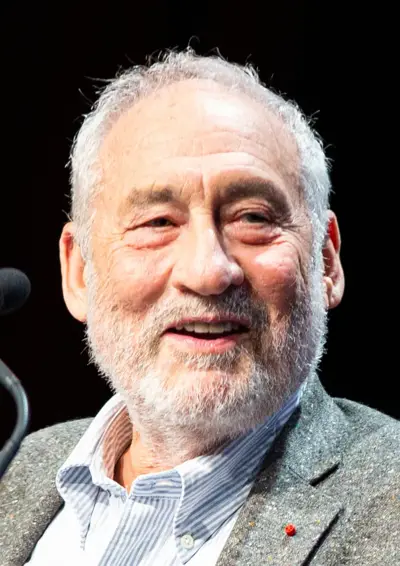
Joseph Eugene Stiglitz is an American economist, public policy analyst, and a professor at Columbia University. He is a recipient of the Nobel Memorial Prize in Economic Sciences (2001) and the John Bates Clark Medal (1979). He is a former senior vice president and chief economist of the World Bank and is a former member and chairman of the (US president's) Council of Economic Advisers. He is known for his support of Georgist public finance theory and for his critical view of the management of globalization, of laissez-faire economists (whom he calls "free-market fundamentalists"), and of international institutions such as the International Monetary Fund and the World Bank.
