Eric Foner Quotes
You pick up very well-known books on Lincoln [and] you will find almost no reference to his long-term belief in colonization. Why? Because it doesn't fit the image of the Great Emancipator. It doesn't fit the retrospective view we want to have of Lincoln as the man who was the moralist in politics, who came into office committed to ending slavery and waited to sign this document.
Foner, Eric. "Eric Foner on Abraham Lincoln." Gilder Lehrman Institute of American History, 2010.


After the Civil War and Reconstruction, the American nation was still bitterly divided intelelctually, socially, emotionally and poliotically. In an effort to bring more unity to America, most of the power stucture and the influentials of the nation began to avoid those issues that would divide North and South and try and promote a narrative that both sides might be able to live with. And this is what Zeitz describes in this quotation. America went through a period of Revisionist History that even in the 21st century was held by many people. It wasn't until the middle of the 20th century that the real history and narrative of the Civil War and Reconstrution emerged from the few academics who had all along criticized the fabricated narritive that did unify the country at the cost of historical accuracy and truth. Many scholars point out that the price that America paid for this unity was the Jim Crow era and a century of legalized racism. Much of the nation was built on the labor of Negro slaves and the victims of the slavery era, also bore the brunt of American unity and reconcilliation.

This prophecy written in the later years of Jefferson’s life turned out to be all too true. St. Domingo was an Island in the Caribbean where slavery produced a bloody war. The American Civil War would be far worse.


While this assessment was true up until the 1980s. By the 21st century there were almost no serious historians who thought that the motivation of the Confederate States for the Civil War was anything but slavery and the economic impact that abolition might bring. However, one of your advantages having this collection of historical quotations is that you can see for yourself why the Southern states say they were seceding. This following are four of the official secession resolution documents. Read these and you will see that all the claims that there were other major reasons for secession are just attempts to make the Confederacy a little less brutal and greedy. See {621371}, {619793}, {621372}, {621375}
Colonization of Blacks back to Africa The first anti-slavery newspaper published in the United States & the first journal in America to advocate immediate, unconditional emancipation


This quotation’s authenticity and accuracy are challenged by many scholars. The only source is the personal reminiscences of General Butler, a politician with Presidential aspirations who had his own agenda. The nuance of wording is very critical as to whether Lincoln was trying to accomplish export or whether he was asking Butler to staff out the feasibility so that Lincoln could deal with others who had raised the issue. Butler’s reply was that it was not feasible ({633655}), and there is no other record of the idea being advocated or implemented. The quotation, if indeed it was a quotations, is taken by some to indicate that Lincoln was no friend of Blacks and very racist to boot.
Lincoln later changed his mind about Colonization when some Black leaders pointed out that the Blacks had built a large part of America and also survived slavery, it they were given fair opportunity, there was no reason that they would not be able to compete and thrive.
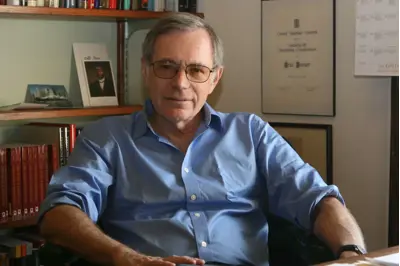
Eric Foner is an American historian. He writes extensively on American political history, the history of freedom, the early history of the Republican Party, African-American biography, Reconstruction, and historiography, and has been a member of the faculty at the Columbia University Department of History since 1982. He is the author of several popular textbooks. According to the Open Syllabus Project, Foner is the most frequently cited author on college syllabi for history courses.
