Ta-Nehisi Coates Quotes
From last century's 'The Birth of a Nation' to this century's 'Gods and Generals,' Hollywood has likely done more than any other American institution to obstruct a truthful apprehension of the Civil War and, thus, modern America's very origins.
Coates, Ta-Nehisi. "Why Do So Few Blacks Study the Civil War?" The Atlantic, The Atlantic Monthly Group, Feb. 2012.


When he referred to "the noose" he was connoting one of the major ways the Southern Segregationists and racists maintained white supremacy and Jim Crowe after the Civil War: Lynching. They terrorized blacks and whites who had different views by kidnapping their victims, torturing them, hanging them, and often mutilating their bodies after the murder. They never were convicted because the Southern law enforcement officers were often part of the lynch mob, the judges were usually themselves racist segregationists, and if jurors voted to convict in the few cases that went to trial, they themselves were risking lynching. From 1882-1968, 4,743 lynchings occurred in the United States. Of these people that were lynched, 3,446 were black.

While this assessment was true up until the 1980s. By the 21st century there were almost no serious historians who thought that the motivation of the Confederate States for the Civil War was anything but slavery and the economic impact that abolition might bring. However, one of your advantages having this collection of historical quotations is that you can see for yourself why the Southern states say they were seceding. This following are four of the official secession resolution documents. Read these and you will see that all the claims that there were other major reasons for secession are just attempts to make the Confederacy a little less brutal and greedy. See {621371}, {619793}, {621372}, {621375}


Marx followed the American Civil War very closely. The freeing of the slaves caused an immediate social, moral and economic revolution, the results of which we live with today.


After the Civil War and Reconstruction, the American nation was still bitterly divided intelelctually, socially, emotionally and poliotically. In an effort to bring more unity to America, most of the power stucture and the influentials of the nation began to avoid those issues that would divide North and South and try and promote a narrative that both sides might be able to live with. And this is what Zeitz describes in this quotation. America went through a period of Revisionist History that even in the 21st century was held by many people. It wasn't until the middle of the 20th century that the real history and narrative of the Civil War and Reconstrution emerged from the few academics who had all along criticized the fabricated narritive that did unify the country at the cost of historical accuracy and truth. Many scholars point out that the price that America paid for this unity was the Jim Crow era and a century of legalized racism. Much of the nation was built on the labor of Negro slaves and the victims of the slavery era, also bore the brunt of American unity and reconcilliation.

The Confederates were very clear that slavery was the cause of the war. Revisionists later tried to add other motives to the Southern cause, but Grant and all the contemporaries on both sides knew slavery was the crux of the matter. So the Confederate cause was the right to brutalize, torture, and even kill an unwilling labor force that was unpaid. No war in history had ever been fought for such a lowly cause and the Confederate leadership skills were amazing in keeping up morale without a decent cause to fight for.


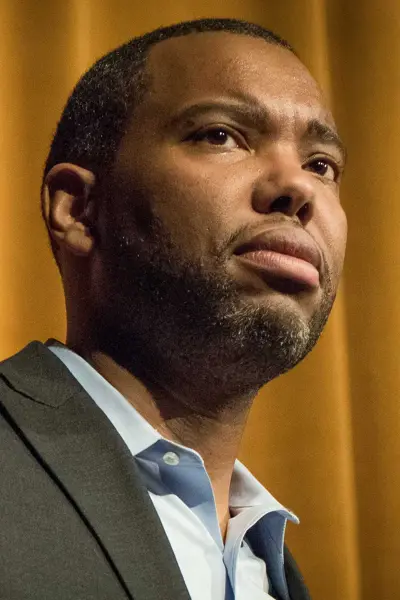
Ta-Nehisi Paul Coates is an American author and journalist. Coates gained a wide readership during his time as national correspondent at The Atlantic, where he wrote about cultural, social, and political issues, particularly regarding African Americans and white supremacy. Coates has worked for The Village Voice, Washington City Paper, and TIME. He has contributed to The New York Times Magazine, The Washington Post, The Washington Monthly, O, and other publications.
