Edward Everett Hale Quotes
You may take this as a general and central principle in criticism: that all science, literature or song, which recognizes conscious life as the ruling principle of the universe, is Christian.
Hale, Edward Everett. The Works of Edward Everett Hale. Little, Brown, and Company, 1898.


Only six years later, the University was intellectually and politically split asunder when the prestigious chairman of the Geology Department wrote that the fossil record was at variance with the date the church had ascribed to Adam and Eve. Vanderbuilt was then controlled by the Tennessee Methodist Episcopal whose Bishop served as its President. See {612709} and {612831}.

At that time, and in much of the world today, religious preaching and those who do it are licensed by the state. Lucian’s response was one of the first statements that governments and temporal powers endorsement was not required, nor was any formal ordination or grant of authority from a formal church as existed among the pagans of the time where the religion was seen as another extension of the state. Even in America there is some ambivalence on this point. Many religions require not only training but a grant of authority from the religious hierarchy. Others such as some Baptists and many Protestant Fundamentalist groups believe that no specific authority is needed other than the “calling of god.” Lucian was apparently the first person to claim the authority as an individual. He was burnt alive for his position. There is a second Saint Lucian. To distinguish the latter is often referred to as Saint Lucian the Syrian.

He was officially hanged for his offence of making this statement on January 8, 1697. His execution, which raised considerable concern, was the last execution for blasphemy in Britain.


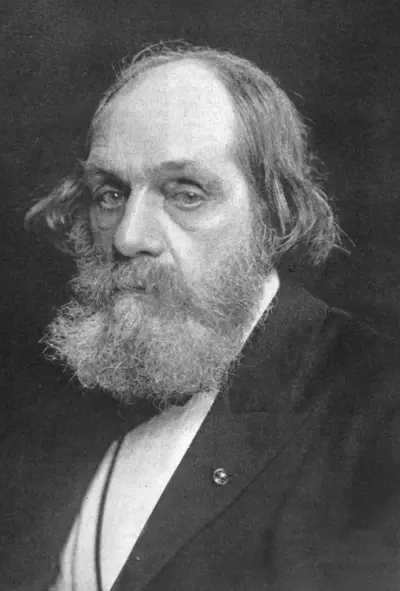
Edward Everett Hale was an American author, historian, and Unitarian minister, best known for his writings such as "The Man Without a Country", published in Atlantic Monthly, in support of the Union during the Civil War. He was the grand-nephew of Nathan Hale, the American spy during the Revolutionary War.
