John Ross Quotes
You have told us that your government is determined to do justice to our nation and never use oppressive means to make us act contrary to our welfare and free will.
The Cherokee were settled Indians with farms and ranches. These lands were coveted by many whites and many including President Andrew Jackson was trying to get the Cherokee to trade their land for land in the Oklahoma Territory, despite the white promises of the past Ross took the case to the Supreme Court which ruled that the Cherokee land was theirs and it must be protected for them by the government. But President Andrew Jackson, disobeying the Supreme Court Opinion, forced the Cherokee at gun and bayonet point onto the Trail of Tears to Oklahoma, totally reneging on this quotation and deeds and promises of the past.
John Ross, 1790–1866, Principal Chief of the Cherokee Nation, Statement to Secretary of War, William Crawford, Quoted in Smithsonian, March 2011
Sourced by: Eigen's Political and Historical Quotations


The whites had constantly encroached on the Cherokee land which was too large for any reasonable patrolling by the Indians themselves. The Federal government persuaded the Cherokee to sign a treaty by which the Indians would give up their title to the larger part of their land. The most important quid pro quo was that the Federal Government would protect the remainder of the Cherokee land from incursion by whites or even other Indians. However, whites who coveted the land started to encroach and build farms and ranches. The Federal government was reluctant to use American soldiers against American citizens and was looking for a way out. However, the Cherokee chiefs were reminding them of their obligation. The state governments were less concerned about Federal treaties, and Georgia passed a law that said that all the Cherokee land must be governed by State Law contrary to the Treaty which gave the Cherokee total sovereignty. But the Feds were not anxious to have a showdown with the states on this issue. Whites, with the connivance of the state governments and the support of some Federal Officials offered to amend the treaty with the Cherokee. The whites would pay the Indians fair market value for their land in the East. The Federal Government would provide equal amount of land in the Indian Territory of Oklahoma, then a territory. The Feds would assist with the relocation and provide troops to protect the Cherokee from thieves and raiders—whites and Indians, and would guarantee that the Cherokee would be completely sovereign in the new land. The chief’s did not want to renegotiate the old treaty—they just wanted it enforced. The Supreme Court ruled in their favor, but President Jackson, ignored the ruling and forced the Cherokee onto the Trail of Tears for Oklahoma and the whites took over the valuable Cherokee land.


One of the great ironies is that she had absolute power over everyone in the Russian empire and serfdom was entrenched in Russia. However, she was far more enlightened than the Russian rulers who preceded her.


This article was published under the name of “A Lover Of Peace” but is generally attributed to Paine.

De Tocqueville was generally concerned about what he saw as an inherent conflict between freedom and equality. Efforts to produce equality can lead in some cases to impingements on some freedoms or rights. Unlimited free rights can produce inequality and a de facto autocracy. Even in modern times America is struggling to find a proper balance.


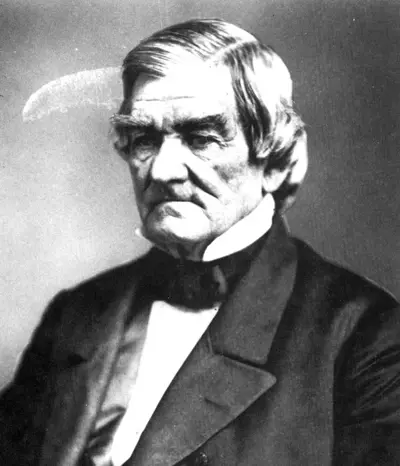
John Ross (Cherokee: ᎫᏫᏍᎫᏫ, romanized: guwisguwi), (meaning in Cherokee: "Mysterious Little White Bird"), was the Principal Chief of the Cherokee Nation from 1828 to 1866 and served longer in that position than any other person. Described as the Moses of his people, Ross influenced the Indian nation through such tumultuous events as the relocation to Indian Territory and the American Civil War.
