James Bryce Quotes
You cannot appeal from the classes to the masses. What the employer thinks, his workmen think. Of course I do not include questions specially relating to labour, in which there may be a direct conflict of interest.
James Bryce, 1838-1922, British Ambassador to the United States, The American Commonwealth, 1888
Sourced by: Eigen's Political and Historical Quotations


After a CIO retail clerks’ union led a strike against Montgomery Ward, Bridges’ union declared that their union and other unions should oppose any labor strikes during World War II.


Ironically, this view was also held by many of the capitalist “Captains of American Industry” who believed that all unions were revolutionist regardless of the views of the union’s membership or leadership. Even today, there are some who still equate trade unionism with communism and revolution. The majority of the unions and the left never believed that, but the extreme communists and extreme capitalists did than and some do today.

Vladimir Lenin

In 1937 there were major automobile and steel strikes. President Roosevelt castigated both sides of the dispute:

At the time, the mine owners and operators claimed that they had NO obligations to their workers—not even to ensure a safe mine. There was no OSHA and workers died and were maimed on the job much more frequently than they do today. Many mine owners now accept that they have obligations to the workers, and the rest are required to have responsible and safe working conditions by law and OSHA regulations.

At the time, it did seem impossible that labor and capital would ever have harmonious relations. But the notion that slavery would solve the problem is as preposterous as anything ever entered into the American political dialogue. But there were many in the South, and some in the North, who actually believed it. Even 150 years later, while labor and capital relations were much better than pre Civil War, they still could not be described as “harmonious” or “friendly”.

Labor unions as we know them did not then exist. Calhoun and many others saw the struggle as a inherent class struggle, not unlike that particular view of Karl Marx. See {606584} for one his more extreme views on the subject.


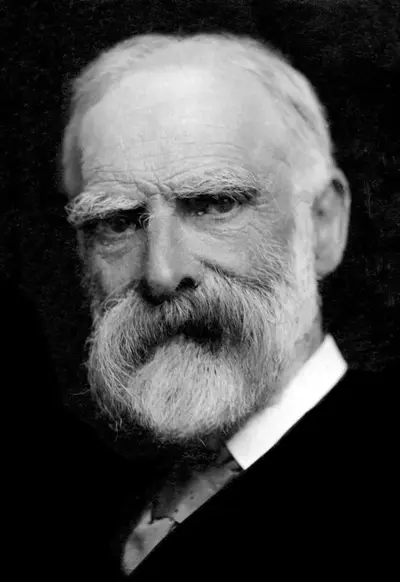
James Bryce, 1st Viscount Bryce, OM, GCVO, PC, FRS, FBA was an Ulster-born academic, jurist, historian, and Liberal politician.
