Simon Bolivar Quotes
You can have no idea of the spirit which animates our military officers. They are no longer the men you knew. They are men who have fought for years and believe themselves superior; and yet they are humiliated and impoverished, with no hope of enjoying the fruits of the work of their lances. They are often resolute llaneros, ignorant men who think themselves superior to those of greater accomplishments. Even I, who have always been at their head, cannot say of what they might be capable. I treat them with the greatest consideration, but it doesn’t seem to inspire them with the spirit which ought to exist among comrades and fellow citizens. Believe me... we are over a volcano about to erupt. I fear peace even more than I fear war.
Simon Bolivar 1783-1830, South American Colonial Liberator, President of Venezuela and Columbia, Statement after winning the revolution against Spain, Quoted in Robert Harvey, Liberators
Sourced by: Eigen's Political and Historical Quotations


Westmoreland’s critics point to this quotation as an illustration of exactly why he was the wrong man for the job. As Vietnam Supreme Commander, he controlled more firepower than any other military leader in history and yet he had “no room” for thought or reason much less mercy. Subsequent commanders of U. S. military efforts were much more sophisticated like, Colin Powell, Norman Schwarzkopf, and Wesley Clark who were leading American thinkers, sophisticated at political and military reasoning and very capable of mercy. The modern American military requires men and women who are skilled at thinking and reasoning.

Moltke’s plan for the Marne Campaign did not work out as planned and he and the Kaiser had a difference of opinion so Moltke was replaced as military commander. This quotation is of critical importance as it shows that the Germans were actually planning the First World War and simply used the assassination of Archduke Ferdinand as an excuse. Thus, the reparations Germany was required to pay when they lost the war. See {642096} for more quotational evidence.


The poem was written for and inscribed upon a monument. The Atheists in Foxholes Monument was donated to Alabama Freethought Association, Inc. by the Freedom From Religion Foundation. It is located adjacent to the Willa Mae Whatley Auditorium, in Fearn Park at Lake Hypatia, Alabama.


The Centograph is a war memorial monument in London. On Remembrance Day, a British Patriotic Holiday, veterans march past the Centograph. The quotation is text uttered by one of her characters.

Dole, was seriously wounded in WWII and lost the use of one arm.

This quotation is a wonderful illustration of the change that has taken place in the American military. The young man who was not skilled enough for anything else was meant to be a soldier. By 2010 only one in four high school graduates would be skilled and intelligent to be qualified for the Untied States Navy. The other services also had high requirements in order to function with the high technology, of the modern military.
The motto was worn on their uniforms which unlike the blue of the rest of the American army was white as can be seen in the famous paining by muralist David R. Wagner. Rhode Island offered freedom to all slaves who would enlist. It not only included Negroes but Indian slaves as well. See {613949} and {614120} for details. The motto itself is interesting in that there was little concept of a country then as most Americans identified themselves as Virginians, New Yorkers or Rhode Islanders. There was no Constitution—only a confederation of States. But the former slaves joining the regiment had never voluntarily associated themselves with Rhode Island, and the first free decision they made was to join the regiment and have a new country.


He was discussing the importance of the public’s perception that the values of the military are the same values as the nation holds.


The General had differed with the George W. Bush Administration neoconservatives over the strategy regarding the invasion and war in Iraq. He was pushed out of office as a result. Later, it was clear that he was right originally, and the press, some members of Congress and others wanted him to comment. He refused.
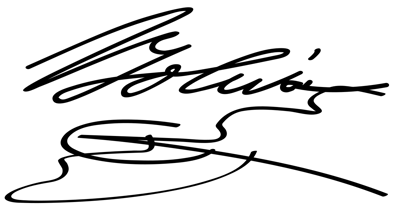
Simón José Antonio de la Santísima Trinidad Bolívar y Ponte Palacios y Blanco (Spanish: [siˈmom boˈliβaɾ] (listen), English: /ˈbɒlɪvər, -vɑːr/ BOL-iv-ər, -ar also US: /ˈboʊlɪvɑːr/ BOH-liv-ar), also colloquially as El Libertador, was a Venezuelan military and political leader who led what are currently the countries of Venezuela, Bolivia, Colombia, Ecuador, Peru, and Panama to independence from the Spanish Empire.
