Patsy Takemoto Mink Quotes
Women…are just as capable of being heads of state as men. Some of the most forceful leaders of history, from the time of Queen Elizabeth to Israel’s Golda Meir and India’s Indira Gandhi in our own time, have been women. Mrs. Gandhi, incidentally, is prime minister of 530 million people, more than twice the population of the United States.
Patsy Takemoto Mink, U. S. Congresswoman (Democrat, HI) in her presentation, “Equal Rights for Women – A National Priority” at the Committee on National Priorities of the Democratic Policy Council meeting, April, 1970
Sourced by: Eigen's Political and Historical Quotations

She was answering the question of what has to happen for America to have a female president.


She was also Australia’s First Woman Cabinet Minister.

Turkey, the only Islamic nation where women have equal rights, made huge developmental and reform strides immediately after Ataturk reformed Turkish society and gave women the vote, freed them from veils and chadors, educated them and gave them equal employment rights. Turkey moved from an impoverished 3rd world nation to a modern industrialized democracy.


She was running for the Democratic Presidential Nomination.


Jinnah was a modern Islamist who saw the role of females in a modern context. He, like the Indian Hindu leaders were in a sense products of the West and Western government and education. He would be very surprised that in his Pakistan men can murder their female relatives who they believe have dishonored the family, or that women would not be educated in the Madrassas, or that authorities could sentence a female relative of a man deemed guilty of seduction to be gang raped, but that is what happens in modern Pakistan. Jinnah and many of the early leaders believed that their new government could modernize Islam but the control and influence went the other way. Pakistan became a religiously dominated autocracy rather than the democracy that Jinnah foresaw.

Although Mao attempted to reform Chinese sexist culture and practice, his and other efforts are taking hold very slowly. Into the 21st century, the Chinese Communist party included women but not at the highest levels where the traditional practice of selecting leaders was to choose elderly males. Part of the prejudice agaist female leaders results from Chinese history where women have ruled or controlled China at several points, but none performed well. This is unlike the experiences of England, India, Israel, and other nations where women have been very successful and respected leaders. There is an American NGO in China, providing assistance to women, which has adopted the name “Half the Sky” and it is the title of a book by Nicholas Kristoff and a record album by Ruby Turner.

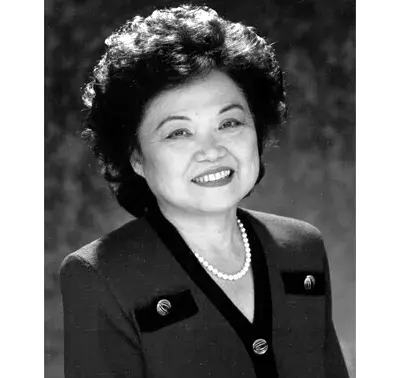
Patsy Matsu Takemoto Mink was an American attorney and politician from the U.S. state of Hawaii. Mink was a third-generation Japanese American, having been born and raised on the island of Maui. After graduating as valedictorian of the Maui High School class in 1944, she attended the University of Hawaii at Mānoa for two years and subsequently enrolled at the University of Nebraska, where she experienced racism and worked to have segregation policies eliminated. After illness forced her to return to Hawaii to complete her studies there, she applied to 12 medical schools to continue her education but was rejected by all of them. Following a suggestion by her employer, she opted to study law and was accepted at the University of Chicago Law School in 1948. While at university, she met and married a graduate student, John Francis Mink. When they graduated in 1951, Patsy Mink was unable to find employment as a married, Asian woman, and after the birth of their daughter in 1952 the couple moved to Hawaii.
