Hjalmar Schacht Quotes
With the aid of this credit policy, however, Germany created an armament second to none, and this armament in turn made possible the results of our policy.
Schacht, Hjalmar, et al. "Memorandum from the Directors of the Reichsbank to Adolf Hitler." 7 Jan. 1939. Reproduced in Trials of the Major War Criminals Before the International Military Tribunal, International Military Tribunal, 1947.


At the insistence of America at the end of WWII, the Japanese Constitution prohibits an army, navy or other military force. However, there are right wingers in Japan who are urging a change in the Constitution so Japan can take its “rightful” place.


One difficulty of diplomacy with many Islamic leaders is that the culture produces very aggressive rhetoric and very aggressive actions like Islamic terrorism. This quotation is often cited to demonstrate that it is the Iranians that had decided that America is it’s enemy; that America is to be humbled; and that their weapons development are targeted at America. This along with the most frequent Iranian slogan, “Death to America,” for many argues for preemptive military action or maintenance of a high state of readiness. Given statements like this from the leading soldier of the theocracy, there is little doubt that Iranian nuclear weapons would be a great danger to America. Therefore when Iran complains that America did not object to the fact that other nations have the nuclear bomb, they do not take their own rhetoric into account. No other nation with possible nuclear capability has made America its major military adversity and claims as an objective to humble the United States.

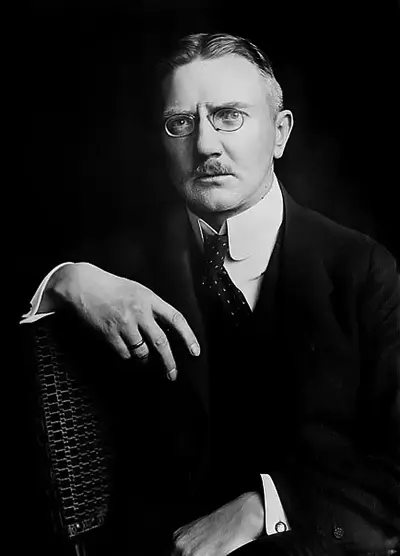
Hjalmar Schacht was a German economist, banker, centre-right politician, and co-founder in 1918 of the German Democratic Party. He served as the Currency Commissioner and President of the Reichsbank under the Weimar Republic. He was a fierce critic of his country's post-World War I reparation obligations.
