Thomas Becket Quotes
With shame be it spoken: by her fall, the Church's liberties have been sacrificed for the sake of temporal advantages. The road to her ruin lay through the sinuous paths of riches: she has been prostituted in the streets to princes; she has conceived iniquity and will bring forth oppression to the undeserving.
Becket, Thomas. The Life and Letters of Thomas à Becket. Edited and translated by J. A. Giles, Whittaker and Co., 1846.


None was forthcoming. This letter is of great historical interest in that it shows the corrupting influence of slavery on all facets of society.


Ingersoll was considered to be the greatest orator and political thinker of his day, but his overt atheistic views curtailed his elected political career.


What is fascinating about this quotation is that although the head of a religion, Smith was not advocating the kinds of personal lifestyles of his church the way modern religious leaders do, but was concerned with the much larger issues of expansionism, corruption of the courts and judiciary, and land distribution. He was a classic reform candidate in that sense. Smith had written to most of the then likely Presidential candidates of both major parties asking for their position on the Mormons who were facing persecution wherever they went. None of the politicians would make any satisfactory commitments. Smith took Direct Action and became the only major religious official to have run for the Presidency of the United States until Pat Robertson tried and failed in 2000. Smith’s assassination shortly thereafter cut his run for the Presidency short before it made much headway and politically he had no chance to affect the race.


This quotation so impressed Thomas Jefferson that he wrote it in his Commonplace Book.


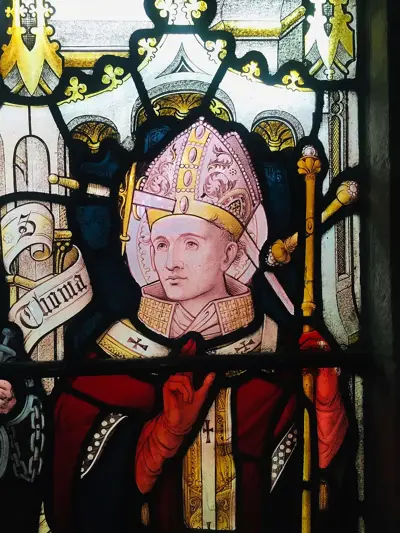
Thomas Becket (/ˈbɛkɪt/), also known as Saint Thomas of Canterbury, Thomas of London and later Thomas à Becket, was Archbishop of Canterbury from 1162 until his murder in 1170. He is venerated as a saint and martyr by both the Catholic Church and the Anglican Communion. He engaged in conflict with Henry II, King of England, over the rights and privileges of the Church and was murdered by followers of the king in Canterbury Cathedral. Soon after his death, he was canonised by Pope Alexander III.
