Terence McKenna Quotes
Why does mathematics describe nature. That's a deeper question than most.
McKenna, Terence. "Eros and the Eschaton." Lecture, 1994.


Most people are surprised that this is a reality of something like physics although sophisticated philosophers have been making this point with respect to human relations for many years. Politics is a particularly good example where conflicting realities can both exist at the same time.


This quotation was from a mathematician who was in the midst of the expansion of mathematics in the late 19th century to include the then rapid and rich development of Probability. This required mathematicians, scientists and others who would use the new mathematics to think in a very different way. For the existing mathematicians his quote clearly states the dilemma for them. Today, scientists and mathematicians have little trouble with “laws of probability” and realize that Probability is governed and controlled in the same way as other fields of mathematics; they are comfortable with different results occurring under the exact same experimental conditions, and those different results are unpredictable in any particular instance, but exactly predictable in terms of frequency of each possible occurrence. This makes Quantum Mechanics rational. However, few non scientists have had their thinking expanded and are comfortable with this thinking. Law and public policy makers are particularly vexed by not being able to think and work in this paradigm where consequences of something can be described for a population precisely, and yet be impossible to describe for any particular individual. This will improve over time, as politicians and other community leaders become better educated mathematically and scientifically.

This is a very interesting philosophical and scientific quotation because he states that in Science, matter and energy are equivalent, which 40 years later would be asserted and proven by Albert Einstein in his Theory of Relativity. There were no notes or details ever found from Ludlow, and he certainly did not have the mathematical background to have showed or proved the mathematical relationship. It was almost certainly a type of metaphysical statement and surely he had no idea of how accurate it was.


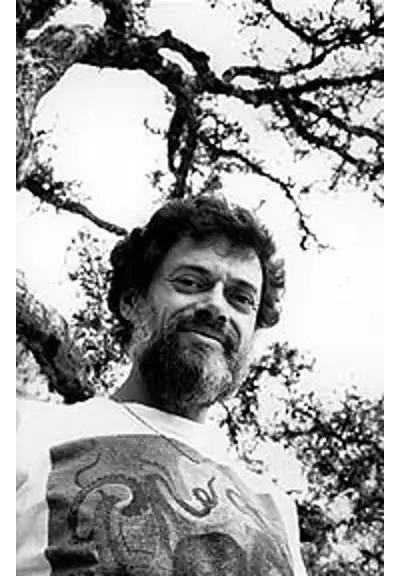
Terence Kemp McKenna was an American ethnobotanist and mystic who advocated for the responsible use of naturally occurring psychedelic plants. He spoke and wrote about a variety of subjects, including psychedelic drugs, plant-based entheogens, shamanism, metaphysics, alchemy, language, philosophy, culture, technology, environmentalism, and the theoretical origins of human consciousness. He was called the "Timothy Leary of the '90s", "one of the leading authorities on the ontological foundations of shamanism", and the "intellectual voice of rave culture".
