Fyodor Dostoevsky Quotes
Whoever has experienced the power and the unrestrained ability to humiliate another human being automatically loses his own sensations. Tyranny is a habit, it has its own organic life, it develops finally into a disease. The habit can kill and coarsen the very best man or woman to the level of a beast. Blood and power intoxicate ... the return of the human dignity, repentance and regeneration becomes almost impossible.
Dostoevsky, Fyodor. The House of the Dead. Translated by Constance Garnett, Macmillan, 1915, p. 195.


This quotation so impressed Thomas Jefferson that he wrote it in his Commonplace Book.


Power tends to corrupt, and absolute power corrupts absolutely. Great men are almost always bad men.
Perhaps the most famous quotation in all of Political Science is this one. What is fascinating is that 74 years earlier, Shelly, the most famous of the English Poets expressed the same idea in one of his great poems. See {627920}. The last sentence of this quote is often excluded.


This is a variation of the famous Lord Acton quote {292904}.


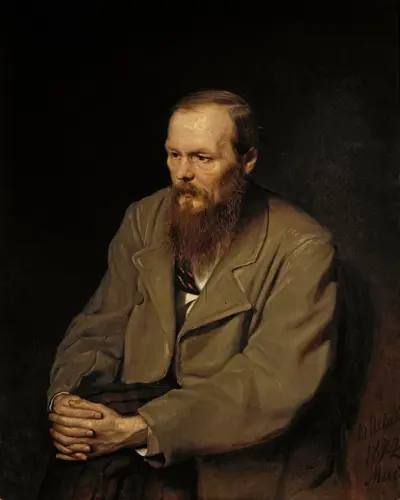
Fyodor Mikhailovich Dostoevsky, sometimes transliterated as Dostoyevsky, was a Russian novelist, philosopher, short story writer, essayist, and journalist. Dostoevsky's literary works explore human psychology in the troubled political, social, and spiritual atmospheres of 19th-century Russia, and engage with a variety of philosophical and religious themes. His most acclaimed works include Crime and Punishment (1866), The Idiot (1869), Demons (1872), and The Brothers Karamazov (1880). Dostoevsky's body of works consists of 12 novels, four novellas, 16 short stories, and numerous other works. Many literary critics rate him as one of the greatest psychological novelists in world literature. His 1864 novel Notes from Underground is considered to be one of the first works of existentialist literature.
