Deborah Ellis Quotes
While the war in Iraq was raging, I spent some time in neighbouring Jordan, meeting with Iraqi refugees who fled their country to try to find some place of safety. I interviewed many families about what had happened to them and what they did as a result.
Ellis, Deborah. Children of War: Voices of Iraqi Refugees. Groundwood Books, 2009, Introduction.


When the United Nations partitioned Palestine into a Jewish and a Palestinian State the Arab Countries all jointly attacked the fledgling Jewish State of Israel. Despite the Israeli’s being overwhelmingly out numbered in man and weapons, they beat back the invaders. However while many Arabs stayed on their Israeli land and some helped the Jews defend against the Arab Armies some abandoned their homes and land and went to neighboring Arab Counties. This is what they had been asked to do by the Arab governments who wanted to be able to attack communities without worrying about killing Arabs. To spur the evacuation the spread false propaganda about Israeli atrocities and frightened them into leaving. As a motivation to leave they were told that they could move into the Jewish lands and property when the Jews had been driven out. To make matters worse, some Israeli radicals repeated the lies to induce the Arabs to abandon their lands. In at least one case Arabs who stayed were subjected to violence. After the defeat of the Arabs, the Israelis had a dilemma in that they could not tell which Arabs were residents who had just been frightened and which had fought on the Arab side or helped the invaders. The result was that with few exceptions, the Arab refugees were not allowed back. Meanwhile, the Arab countries would not allow the refugees to settle and become citizens of the Arab countries (except for Jordan). The Palestinian refugees were a particularly fertile population and were cared for by the United Nations and have multiplied to many times their original size maintaining a continuous festering problem.


DPs were “displaced persons” -- the euphemism for people who were no longer welcome in their country of birth. Congress, made up mostly of immigrants or the children of immigrants who were poor and downtrodden, were not enthusiastic about the United States absorbing many of the world’s DPs resulting from WWII.
earlier given as 100,000 dead The CIA had actively financed and supported a Coup by General Sukarto in Indonesia. There were horrible atrocities in Eastern Java and other areas where the populations were sympathetic to and would likely vote for the communists. Not only did the CIA do nothing to restrain these atrocities, but the only planes that were engaged were unmarked military jets flown by CIA contract pilots who bombed and strafed many of the Indonesian villages. Originally Ambassador Green had reported that “only” 100.000 Indonesians were killed (in just a few days), but as this testimony showed, the deliberate slaughter involved many more and some historians claim that there were even more murders. This one engagement probably involved many more deliberate killing of civilians in a few days than took place in the entire Vietnam war. However, since the hearings were classified, the Senators were not allowed to tell anyone. Even in the classified hearings Ambassador lied to the Congress about the CIA involvement. No one, including the CIA pilots who bombed the defenseless villages, was ever brought to justice for the killing of the 500,000+ civilians.
“Fora” is the plural of forum. It was then preferable to “forums” as the plural form, because “forum” was a Latin word and the Latin plural for nouns ending in “um” was “a” as in “flora and fauna”. This was adopted as U. S. Policy until the second decade of the 21st century when the combination of the War on Terror, and the huge world refugee crises triggered by the Syrian revolution produced much nativist and and-immigration feeling to go along with the small proportion of American anti-immigrants who have almost always been a part of the American pluralistic landscape.


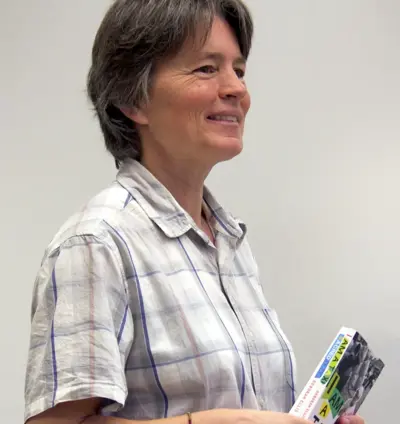
Deborah Ellis CM OOnt is a Canadian fiction-writer and activist. Her themes are often concerned with the sufferings of persecuted children in the Third World.
