Isaac Bashevis Singer Quotes
While the poet entertains he continues to search for eternal truths, for the essence of being. In his own fashion he tries to solve the riddle of time and change, to find an answer to suffering, to reveal love in the very abyss of cruelty and injustice. Strange as these words may sound I often play with the idea that when all the social theories collapse and wars and revolutions leave humanity in utter gloom, the poet--whom Plato banned from his Republic--may rise up to save us all.
Singer, Isaac Bashevis. "Nobel Lecture." The Nobel Prizes 1978, edited by Wilhelm Odelberg, Almqvist & Wiksell International, 1979.


The most famous 4 words of King’s speech, “I have a dream” were thought by many scholars of non-violence to have been less important than these 4 words which they regard as totally fundamental to the success of non-violence as a strategy.

Some politicians wrongly think that this is was first an American idea. Spinoza’s ideas were considered so radical and dangerous that he was the only man in history who was excommunicated by the Catholics, the Jews and the Muslims.


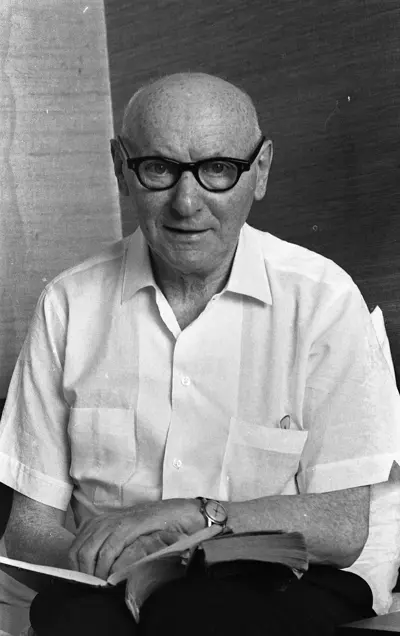
Isaac Bashevis Singer was a Polish-born Jewish-American writer in Yiddish, awarded the Nobel Prize in Literature in 1978. The Polish form of his birth name was Icek Hersz Zynger. He used his mother's first name in an initial literary pseudonym, Izaak Baszewis, which he later expanded. He was a leading figure in the Yiddish literary movement, writing and publishing only in Yiddish. He was also awarded two U.S. National Book Awards, one in Children's Literature for his memoir A Day Of Pleasure: Stories of a Boy Growing Up in Warsaw (1970) and one in Fiction for his collection A Crown of Feathers and Other Stories (1974).
