Ignatius of Antioch Quotes
Wherever the bishop shall appear, there let the multitude also be; even as, wherever Jesus Christ is, there is the Catholic Church.
Ignatius of Antioch. "Epistle to the Smyrnaeans." The Apostolic Fathers: Greek Texts and English Translations, edited and translated by Michael W. Holmes, 3rd ed., Baker Academic, 2007, ch. 8.


The struggle in the Catholic Church reached an amazing state. Just after a new pope, Martin V, had been elected the Council of Bishops at Constance came up with this notion which placed their views above those of the Pope under the theory that this particular council derived its power and authority directly from Christ while the pope was only God’s “vicar on earth.” The struggle was somewhat akin to the inevitable struggle for power between an executive branch and a legislative branch. The Council’s ascendancy didn’t last very long and was repudiated by successive popes.

The Roman Catholic Clergy as well as the Vatican was quite corrupt in Luther’s time which was one of the reasons for his reform effort. Throughout history some clerics have abused their positions and roles and acted as impediments to the faith in their own religions.


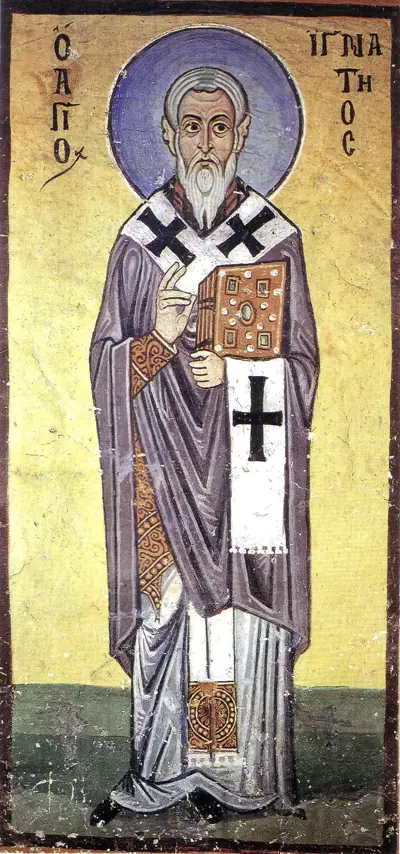
Ignatius of Antioch (/ɪɡˈneɪʃəs/; Greek: Ἰγνάτιος Ἀντιοχείας, Ignátios Antiokheías; died c. 108/140 AD), also known as Ignatius Theophorus (Ἰγνάτιος ὁ Θεοφόρος, Ignátios ho Theophóros, lit. "the God-bearing"), was an early Christian writer and bishop of Antioch. While en route to Rome, where he met his martyrdom, Ignatius wrote a series of letters. This correspondence now forms a central part of a later collection of works known to be authored by the Apostolic Fathers. He is considered to be one of the three most important of these, together with Clement of Rome and Polycarp. His letters also serve as an example of early Christian theology. Important topics they address include ecclesiology, the sacraments, and the role of bishops.
