Michelle Alexander Quotes
When young black men reach a certain age - whether or not there is incarceration in their families - they themselves are the target of police stops, interrogations, frisks, often for no reason other than their race. And, of course, this level of harassment sends a message to them, often at an early age: No matter who you are or what you do, you're going to find yourself behind bars one way or the other. This reinforces the sense that prison is part of their destiny, rather than a choice one makes.
Alexander, Michelle. "The New Jim Crow: An Interview with Michelle Alexander." Interview by Jody Sokolower. Rethinking Schools, vol. 26, no. 2, Winter 2011-2012.


There is a significant argument as to whether of not race should be used to try and predict the variables that will likely produce crimes. Some social scientists argue that virtually everything correlates with race {633357} and therefore the predictions are meaningless. Here, Kurtz argues that if you do not use race, since it does correlate with so much, then you might as well not try and determine the predictive factors of crime. Reality lies in the center, use race as one of the statistical variables but do not use it for profiling potential criminals and potential suspects unless there is observable and not deduced or inferred evidence of race in the crime.


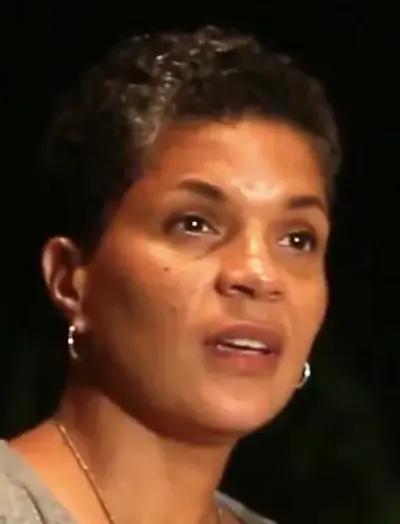
Michelle Alexander is a writer, civil rights advocate, and visiting professor at Union Theological Seminary (New York City). She is best known for her 2010 book The New Jim Crow: Mass Incarceration in the Age of Colorblindness, and is an opinion columnist for The New York Times.
