Woodrow Wilson Quotes
When you come into the presence of a leader of men, you know that you have come into the presence of fire - that it is best not uncautiously to touch that man - that there is something that makes it dangerous to cross him.
Wilson, Woodrow. Leaders of Men. Edited by T. H. Vail Motter, Princeton University Press, 1952, p. 30.


Obama was a President who believed deeply in the concepts of checks and balances and separation of powers. He did not punish members of Congress who opposed him by closing federal installations in their state of district, not giving government contracts to companies in his district and in the case of member of his own party who were “recalcitrant” supporting opponent in primary elections and failing to support in general elections. Presidents Nixon and Johnson used these techniques particularly effectively. As a result they pushed their legislative programs through Congress very effectively. All other modern Presidents have done this to one degree or another, but Obama did not. He believed that pressure on member of Congress should be limited to persuasion and public debate moving public opinion. Many seasoned politicians and political observers however thought that this was Obama’s biggest weakness as a President. Lyndon Johnson did not have to actually punish many member of Congress, as his willingness to do so was well known and thus few opposed him when he called or met with them and “gave them the treatment.” But Congress knew that Obama had taken punishment and retaliation off the table, and many opposed him including member of his own party.

The speaker had negotiated a wonderful budget with President Barak Obama, but he had many extreme Republican Tea Party Conservatives who would not support the compromise. The speaker could have passed the bill anyway with the votes of the Democrats and the more rational and centrist Republicans, but he chose not do do so and renegged on his fairly public agreement with the President rather than have a large part of his caucus repudiate him. Talk show host Jay Leno had asked him why de did that. This was his profound answer. Ironically, the dissidents turned on him anyway, and he lost many of his followers. So he resigned as the speaker and also from the House itself


Samuel Langhorne Clemens, 1835-1910
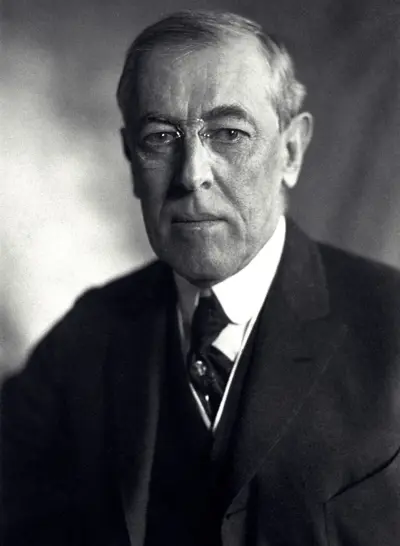
Thomas Woodrow Wilson was an American politician and academic who served as the 28th president of the United States from 1913 to 1921. A member of the Democratic Party, Wilson served as the president of Princeton University and as the 34th governor of New Jersey before winning the 1912 presidential election. As President, Wilson led the United States into World War I in 1917. He was the leading architect of the League of Nations, and his progressive stance on foreign policy came to be known as Wilsonianism. Scholars have generally ranked Wilson in the upper tier of U.S presidents, although he has been criticized for supporting racial segregation and white supremacy.
