Benjamin Franklin Quotes
… when you assemble a number of men to have the advantage of their joint wisdom, you inevitably assemble with those men, all their prejudices, their passions, their errors of opinion, their local interests, and their selfish views. From such an Assembly can a perfect production be expected?
He was too ill to read the speech himself and it was read by James Wilson for him. Franklin, ever the practical man, thought perfection to be an unreachable and impossible standard.
Benjamin Franklin, 1706-1790, Governor of Pennsylvania, Member of the Continental Congress & the Constitutional Convention, Governor of Pennsylvania, President of the Pennsylvania Assembly, U.S. Minister to France, Postmaster General of the American Colonies, Speech assenting to the new Federal Constitution, Philadelphia, September 17, 1787
Sourced by: Eigen's Political and Historical Quotations


His observation was particularly made about Party Politics in an era of ideological party identity. If a Democrat were presented with evidence that lowering corporate taxes would increase the tax yield, it would be hard for him to accept this change of mind because if he did change, his party colleagues would accuse him of abandoning the basic principles of the party,


This is a common phenomenon in most democracies. There are 3 reasons that people vote against their interests. One is that they are fooled by the slickness of particular candidate and/or promises and assurances. Second, their cultural values are offended by the candidate who advocates and will fight for their interests. Third, they have been frightened sufficiently that they will sacrifice their interests if that will protect them. One frequent example is that in America in all wars, many people have voted for the candidate or party who would erode and/or deny their civil rights in the name of national security.


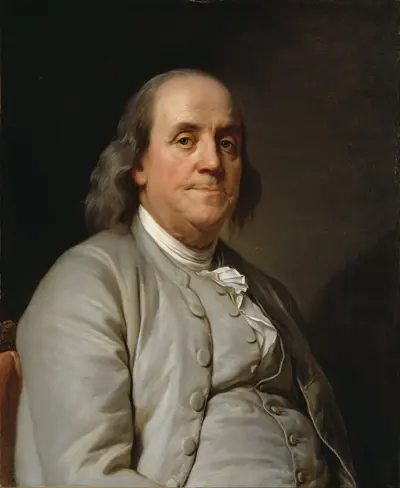
Benjamin Franklin FRS FRSA FRSE was one of the Founding Fathers of the United States. A polymath, he was a leading writer, printer, political philosopher, politician, Freemason, postmaster, scientist, inventor, humorist, civic activist, statesman, and diplomat. As a scientist, he was a major figure in the American Enlightenment and the history of physics for his discoveries and theories regarding electricity. As an inventor, he is known for the lightning rod, bifocals, and the Franklin stove, among other inventions. He founded many civic organizations, including the Library Company, Philadelphia's first fire department, and the University of Pennsylvania.
