John C. Calhoun Quotes
When we contend, let us contend for all our rights - the doubtful and the certain, the unimportant and essential. It is as easy to contend, or even more so, for the whole as for a part. At the termination of the contest, secure all that our wisdom and valour and the fortune of war will permit.
Calhoun, John C. "Speech on the Loan Bill." 25 Feb. 1814. The Works of John C. Calhoun, edited by Richard K. Crallé, vol. 2, D. Appleton and Company, 1853, p. 95.


In the American democracy the tradeoff between military activity and respect for human rights has always been an issue.

There is a corollary to this proverb, that frequently reflects itself in Arab culture. It is that one who is not strong must never concede. To concede out of strength is manly and noble. To concede out of weakness is cowardly and base. Middle Eastern International politics is totally irrational to Westerners when a badly defeated country of group will often not even meet with the victors to discuss peace or terms of surrender. It is the victors only who can make concessions without losing dignity and respect.


The free man, not controlled by others may see no rational reason to fight and therefore the refusal to war can be as courageous as fighting. This idea is still not accepted in many cultures and nations. The issue was argued mightily in the Vietnam War. Spinoza’s ideas were considered so radical and dangerous that he was the only man in history who was excommunicated by the Catholics, the Jews and the Muslims.


Clovis did and the Romans were routed.

Attila the Hun

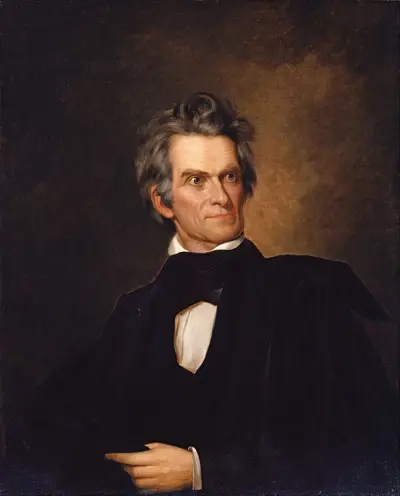
John Caldwell Calhoun was an American politician and political theorist from South Carolina who held many important positions including being the seventh vice president of the United States from 1825 to 1832, while adamantly defending slavery and protecting the interests of the white South when its residents were outnumbered by Northerners. He began his political career as a nationalist, modernizer, and proponent of a strong national government and protective tariffs. In the late 1820s, his views changed radically, and he became a leading proponent of states' rights, limited government, nullification, and opposition to high tariffs. He saw Northern acceptance of those policies as a condition of the South remaining in the Union. His beliefs and warnings heavily influenced the South's secession from the Union in 1860–1861.
